

Behind on Your Mortgage? You May Have More Options Than You Realize.
Perhaps you missed your first mortgage payment last month. Maybe you are already three or four payments behind. Or perhaps a letter from your mortgage company has left you wondering whether you are about to lose your house.
Whatever brought you here, understanding your options is the first step toward making an informed decision.
This guide explains seven immediate actions Sacramento-area homeowners can take, how to understand foreclosure notices, where to receive free assistance, and when selling a property as-is may make financial sense.
The 60-Second Answer
If you are behind on mortgage payments in Sacramento, contact your mortgage servicer immediately. Confirm the amount you owe, determine whether foreclosure proceedings have started, and request information about mortgage assistance.
Next, speak with a HUD-approved housing counselor and evaluate whether your financial hardship is temporary or permanent.
If keeping the house is no longer financially realistic, compare a traditional listing, a direct as-is cash sale, and, if necessary, a lender-approved short sale.
Missing a mortgage payment does not automatically mean you will lose your house. But taking action early may preserve more options.
Free, Independent Foreclosure Assistance
You do not need to agree to sell your house to receive legitimate foreclosure counseling.
HUD Housing Counseling Referral Line:
800-569-4287
Foreclosure-prevention counseling through HUD-participating agencies is available at no cost.
Six Things Every Homeowner Should Know
01 | One Missed Payment
Being delinquent on a mortgage is not the same as having a foreclosure auction scheduled.
02 | Contact Your Servicer
Ask about mortgage assistance before additional missed payments and expenses accumulate.
03 | Free Help Exists
Independent housing counselors can help you understand your choices without requiring you to sell.
04 | Your Equity Matters
You may still have substantial home equity even when you are several payments behind.
05 | Selling Is an Option
A completed sale may resolve the mortgage obligation before foreclosure when the necessary requirements are satisfied.
06 | Repairs May Not Be Necessary
Some direct cash buyers purchase homes in their existing condition, including properties with substantial deferred maintenance.
Why Sacramento Homeowners Fall Behind on Mortgage Payments
Mortgage problems are not always the result of poor financial planning. Many homeowners make their payments successfully for years before an unexpected event changes their financial circumstances.
A job loss, medical expense, divorce, family emergency, or increase in housing costs can disrupt a household budget surprisingly quickly.
For landlords, the situation can be especially frustrating. A rental property may have been purchased with the expectation that rental income would cover the mortgage. When tenants stop paying, the owner remains responsible for the loan.
Common Causes of Mortgage Delinquency
- Job loss or reduced working hours.
- Medical expenses or disability.
- Divorce, separation, or death of a spouse.
- Increasing insurance premiums or property taxes.
- Unexpected roof, plumbing, or foundation repairs.
- Nonpaying tenants or extended rental vacancies.
- Retirement income that no longer supports housing costs.
- Business losses or reduced self-employment income.
The cause of the hardship matters because different problems may require different solutions.
A homeowner who expects to return to work next month may benefit from a temporary mortgage assistance arrangement. A homeowner whose income has permanently declined may need a more substantial adjustment to housing expenses.
Before deciding whether to keep or sell your property, determine which of these situations most closely describes your circumstances.
Temporary Hardship
Your income is expected to recover, and you may be able to resume regular payments with appropriate assistance.
Long-Term Hardship
Your income or expenses have changed permanently, and your existing mortgage may no longer be affordable.
7 Steps to Take When You’re Behind on Your Mortgage
You do not need to solve every financial problem in one day. Start by gathering reliable information, understanding your deadlines, and working through the following steps.
Contact Your Mortgage Servicer Immediately
Your mortgage servicer is the company responsible for receiving and processing your mortgage payments. It may not be the same company that originally provided your loan.
Use the telephone number on your most recent mortgage statement or the servicer’s official website. Ask to speak with its mortgage assistance, hardship, or loss mitigation department.
Explain what caused your financial hardship and whether you expect your income to recover.
What Should You Ask?
- What is my total past-due balance today?
- How much would I need to pay to bring my loan current?
- What late fees or additional charges have been assessed?
- What mortgage assistance programs might be available?
- Has a Notice of Default been recorded?
- Is a foreclosure auction scheduled?
- What documents and deadlines apply to my assistance application?
Keep a written record of every conversation, including the date, representative’s name, and reference number.
Request written confirmation of important deadlines and proposed arrangements. A verbal conversation is not a substitute for understanding the actual terms of an agreement.
Review the Consumer Financial Protection Bureau’s mortgage assistance guidance for additional information.
Determine Exactly How Far Behind You Are
There is a significant difference between missing one payment, being several months delinquent, receiving a Notice of Default, and having a trustee’s sale scheduled.
Each stage may present different opportunities and deadlines.
Review your mortgage statements and payment history. Confirm the regular monthly payment, unpaid scheduled amounts, escrow adjustments, late charges, and any foreclosure-related expenses.
If you believe the mortgage company has made an error, request an explanation and use the applicable mortgage-servicing dispute procedures.
For many covered residential mortgages, federal servicing rules generally restrict the first foreclosure notice or filing until the borrower is more than 120 days delinquent. Exceptions apply, and not every loan is subject to the same protections.
Do Not Treat 120 Days as a Grace Period
Mortgage delinquency may have consequences well before formal foreclosure begins. Waiting several months can increase the amount owed and make available solutions more difficult to complete.
For additional information, review the CFPB foreclosure timeline explanation.
Speak With a HUD-Approved Housing Counselor
Homeowners experiencing mortgage difficulties often receive advice from relatives, friends, real estate professionals, and companies advertising foreclosure relief.
While some information may be useful, an independent housing counselor can help you evaluate the situation without requiring you to enter a property sale.
A counselor may help you understand mortgage assistance programs, organize financial documents, review your budget, communicate with your mortgage servicer, and recognize potential foreclosure rescue scams.
This can be particularly valuable if you have received confusing correspondence or are having difficulty completing a loss mitigation application.
Get Independent Help Before Making a Major Decision
Contact a housing counselor through the U.S. Department of Housing and Urban Development.
Call: 800-569-4287
Foreclosure-prevention counseling through HUD-participating agencies is free.
Determine Whether Your Mortgage Is Still Affordable
Catching up on missed payments is only part of the problem. You also need to determine whether you can comfortably maintain future payments.
Start with your reliable monthly household income. Subtract essential expenses, including utilities, food, transportation, insurance, medical costs, and other unavoidable financial obligations.
Then determine how much remains available for your mortgage and any additional catch-up payments.
Example: Can You Afford a Repayment Plan?
Imagine that your regular mortgage payment is $2,400 and you are three payments behind.
If your income has recovered, the additional $600 may be manageable. If your income has permanently declined, the proposed arrangement may create another financial problem.
Do not agree to a repayment arrangement simply because it temporarily resolves the immediate delinquency. Review whether the arrangement is sustainable over its entire term.
If the numbers do not work, ask your servicer about other programs and consult a housing counselor.
Explore Your Options for Keeping the House
Many homeowners want to remain in their homes. Selling should not be presented as the only available solution when a sustainable mortgage assistance arrangement may be possible.
Depending on your loan, financial circumstances, and eligibility, the following alternatives may be available.
Repayment Plan
Allows eligible borrowers to catch up on missed amounts over an agreed period while maintaining required mortgage payments.
Forbearance
May temporarily reduce or pause required payments. Missed amounts are not automatically forgiven and must be addressed under the applicable terms.
Loan Modification
Changes one or more existing loan terms. A modification may improve affordability, but approval and the resulting terms vary.
Reinstatement
Generally involves paying the amount required to cure the mortgage default within the applicable timeframe.
Refinancing
May replace the existing mortgage, although delinquency, credit history, income, and equity can affect eligibility.
Other Loan-Specific Options
Some borrowers may qualify for deferrals, partial claims, or other programs depending on the mortgage type and applicable requirements.
Ask your servicer to explain the total cost, future monthly payment, treatment of unpaid amounts, and any deadlines associated with each option.
For additional guidance, visit the CFPB’s foreclosure-prevention resources.
Evaluate Whether Selling Makes Financial Sense
If keeping the property is no longer financially realistic, selling may provide an opportunity to resolve the mortgage obligation and potentially preserve remaining equity.
Before making that decision, determine the property’s approximate market value, current mortgage payoff, other liens, selling expenses, and available time.
Traditional MLS Listing
Listing your property with a real estate professional may provide exposure to a broad pool of buyers and potentially produce a higher sale price.
However, property preparation, showings, inspections, financing contingencies, and closing requirements may affect the timeline.
Direct As-Is Cash Sale
A local direct cash buyer may be willing to purchase a house in its existing condition without requiring the homeowner to complete extensive repairs.
This can be useful for houses with deferred maintenance, unwanted belongings, tenant problems, or other circumstances that complicate a traditional sale.
Cash offers may be lower than potential retail prices because buyers consider repairs, holding expenses, resale costs, and investment risk.
Learn more about how cash buyers determine property value in Sacramento.
Lender-Approved Short Sale
If available sale proceeds will not cover the mortgage obligation, a short sale may be possible when the lender agrees to accept less than the amount owed.
Short sales generally require additional documentation and approval. They may take considerable time, even when a willing buyer is available.
Review the treatment of remaining debt and potential tax consequences with qualified professionals.
Visit the Sacramento Home Selling short sale resource for additional information.
Create a Written Plan and Track Every Deadline
Once you understand your mortgage status and available alternatives, organize your next steps into a written action plan.
Identify the people you need to contact, the documents you must submit, when you expect a response, and what you will do if your preferred solution is unavailable.
If you are pursuing a sale, ask the title or escrow company about the mortgage payoff, recorded liens, ownership requirements, and anticipated closing process.
A Signed Purchase Agreement Does Not Stop Foreclosure
Do not assume that listing your property, accepting a cash offer, or submitting a mortgage assistance application automatically postpones a trustee’s sale.
If an auction is scheduled, confirm any postponement directly with the appropriate parties and obtain qualified advice about the actual deadline.
The earlier you begin, the more opportunity you may have to compare solutions rather than making decisions under immediate financial pressure.
What Happens When You Miss Mortgage Payments in California?
California commonly uses a nonjudicial foreclosure process for residential deeds of trust. This means a trustee may conduct a foreclosure without the lender first obtaining a court judgment, provided the applicable legal requirements are satisfied.
However, missing a payment does not immediately result in a foreclosure auction.
Mortgage delinquency, federal servicing requirements, borrower contact, formal notices, and statutory waiting periods all influence the process.
| Stage | What It Means | What You Should Do |
|---|---|---|
| Missed Payment | The mortgage becomes delinquent under its terms. | Contact your servicer. |
| Continuing Delinquency | Unpaid amounts and potential charges accumulate. | Explore assistance programs. |
| Notice of Default | A formal foreclosure notice is recorded after applicable prerequisites. | Verify dates and obtain qualified assistance. |
| Notice of Trustee’s Sale | A proposed foreclosure auction is formally noticed. | Confirm the scheduled date immediately. |
| Trustee’s Sale | The property may be sold through foreclosure. | Seek advice about remaining rights and next steps. |
Under California’s typical nonjudicial foreclosure process, at least three months generally must elapse after recording the Notice of Default before a Notice of Trustee’s Sale can be given. Additional notice and timing requirements apply before the sale.
Other federal and state protections may affect the actual timeline. The loan type, property use, pending assistance applications, and individual circumstances can also matter.
Have You Received a Foreclosure Notice?
Do not calculate your personal deadline using a general online timeline. Verify the actual recorded information and consult a qualified California attorney or housing counselor promptly.
Review the California Courts nonjudicial foreclosure guide for authoritative information.
How Quickly Can Missed Mortgage Payments Add Up?
Financial problems can become substantially more difficult when missed mortgage payments accumulate over several months.
Consider a hypothetical Sacramento homeowner with a scheduled mortgage payment of $2,500 per month.
Unpaid Mortgage Payments Over Time
Illustrative example: $2,500 monthly mortgage payment.
Amounts represent unpaid scheduled payments only. They exclude applicable late fees, escrow changes, foreclosure expenses, and other charges. They are not actual payoff or reinstatement quotes.
The financial consequences may extend beyond missed payments. Credit reporting, legal expenses, moving costs, and reduced negotiating flexibility can also affect the homeowner.
Nevertheless, a homeowner can be behind on mortgage payments and still have substantial equity in the property.
How Much Equity Could You Have Remaining?
Suppose your Sacramento property has an estimated current market value of $450,000 and your updated mortgage payoff is $290,000.
This example demonstrates why understanding your property’s value matters. Being delinquent does not necessarily mean you have lost your equity.
When calculating potential sale proceeds, use a current mortgage payoff rather than adding missed payments again if those amounts are already included in the payoff quote.
For a detailed explanation of selling expenses, read our educational resource at Sacramento Home Selling: How Much Does It Really Cost to Sell a House in Sacramento?
Should You Keep Your Sacramento House or Sell It?
There is no universal answer. The right decision depends on your income, mortgage status, property condition, available equity, personal circumstances, and future housing needs.
Keeping the House May Make Sense When:
- Your hardship is temporary.
- Your income is expected to recover.
- You qualify for sustainable mortgage assistance.
- You can afford future housing expenses.
- You want to remain in the property.
Selling May Deserve Consideration When:
- Your mortgage is no longer affordable.
- Your income has permanently declined.
- The house needs expensive repairs.
- Rental income no longer covers expenses.
- You want to relocate or reduce financial obligations.
| Option | Potential Benefit | Consideration |
|---|---|---|
| Repayment Plan | May cure temporary delinquency. | Additional payments must be affordable. |
| Loan Modification | May improve loan affordability. | Approval and terms vary. |
| Traditional Listing | Broad market exposure. | Marketing, contingencies, and closing time. |
| As-Is Cash Sale | Potentially fewer repair and financing requirements. | Compare price, expenses, and buyer reliability. |
| Short Sale | May permit a sale when proceeds cannot cover the debt. | Lender approval and additional time. |
When comparing a traditional listing with a direct cash offer, I encourage homeowners to consider more than the purchase price. Look at the property’s condition, the expenses required to sell, the available time, and the amount you could actually receive at closing.
A higher proposed sale price is not necessarily the best financial outcome if completing that sale requires expenses or time you cannot reasonably manage.
Read more about comparing your home-selling options before making a decision.
Can You Sell Your House As-Is When You’re Behind on Mortgage Payments?
Yes. Being behind on mortgage payments does not automatically prevent a homeowner from selling a property.
A successful transaction must address the mortgage payoff, title requirements, other recorded obligations, and any applicable foreclosure deadlines.
When the property has sufficient equity, the mortgage and other required obligations may be paid through escrow, with remaining net proceeds distributed to the seller.
If the available proceeds are insufficient, lender approval or another arrangement may be necessary.
What If the House Needs Repairs?
Homeowners experiencing financial hardship may not have the money to replace a roof, renovate a kitchen, repair plumbing, or address other significant property problems.
Some local cash buyers purchase properties in their existing condition, allowing sellers to avoid completing renovations before closing.
Properties That May Be Suitable for an As-Is Sale
- Houses with deferred maintenance.
- Properties needing substantial renovations.
- Vacant or inherited homes.
- Rental properties with nonpaying tenants.
- Homes containing unwanted belongings.
- Properties with certain code violations or other complications.
The condition of the property will influence its value and the terms a buyer may offer. Selling as-is also does not eliminate applicable disclosure obligations.
Learn more about the Sacramento as-is selling process.
What If Tenants Are Causing the Mortgage Problem?
Landlords sometimes experience mortgage delinquency because tenants stop paying rent. Even when rental income disappears, the property owner remains responsible for the mortgage.
Depending on the property and buyer, it may be possible to sell a tenant-occupied house without first completing an eviction.
Existing leases, tenant protections, disclosure requirements, and the terms of the purchase agreement must be considered.
Explore our guide to selling a Sacramento rental property with nonpaying tenants.
Need to Sell Your House but Aren’t Ready to Move?
Some homeowners experiencing financial hardship want to sell their property but are concerned about finding replacement housing immediately.
A properly structured sale-and-rent-back arrangement may allow an eligible homeowner to sell a property and remain there as a tenant under a separately negotiated agreement.
Explore Sacramento Sell & StayAvailability depends on the property, transaction terms, applicable law, and individual circumstances.
Sale-and-rent-back arrangements require careful review of the purchase price, rent, security deposit, occupancy period, maintenance responsibilities, and future housing affordability.
Selling transfers ownership. Remaining in the house as a tenant does not preserve your former ownership rights.
California has special protections and restrictions that may apply to purchases of owner-occupied homes in foreclosure. Not every sale-and-rent-back structure is legally available or appropriate in that situation.
Homeowners facing foreclosure should obtain independent legal advice before entering any such arrangement. Do not rely on a promise that you can remain in or eventually repurchase the property without understanding the written terms and applicable law.
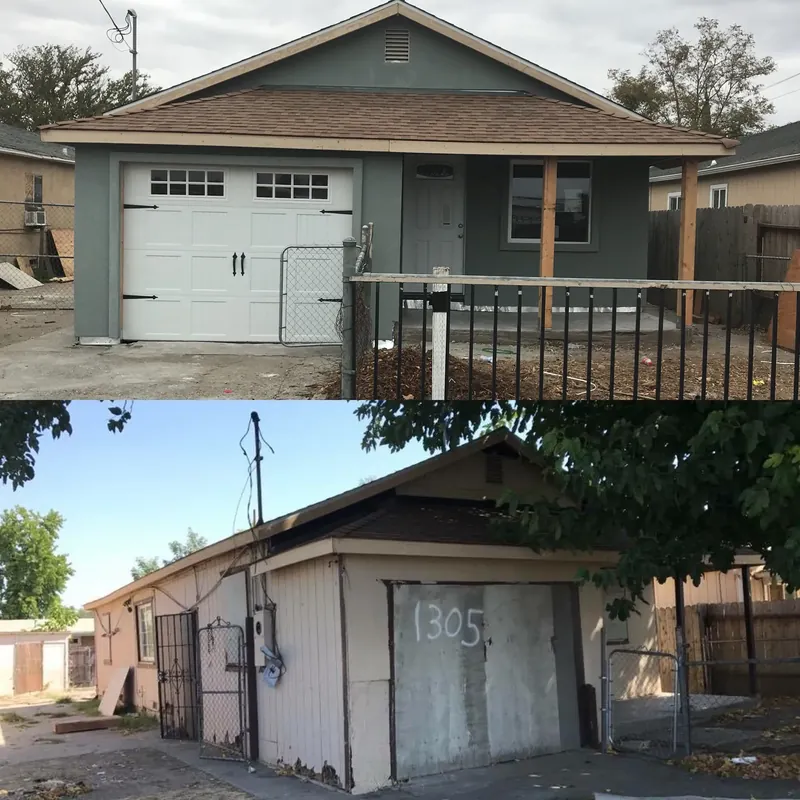
How I Helped a Former Air Force Colleague Avoid Foreclosure
Approximately ten years ago, I came across a Sacramento property listed on the Multiple Listing Service as a short sale.
The homeowner was experiencing mortgage difficulties after renting the house to family members who failed to make the expected mortgage payments.
Eventually, the owner found himself facing foreclosure.
While researching the property, I realized that I knew the seller personally. We had worked in the same building here in Sacramento during our time in the United States Air Force, although we worked in different departments.
I contacted him and ultimately purchased his house.
The Challenge: Lender Approval
Because the transaction was a short sale, the lender had to approve the purchase.
That approval process took approximately four months.
Once approval was obtained, we completed the purchase, helping the homeowner avoid foreclosure. He was extremely grateful for the outcome.
The Property After the Purchase
After acquiring the property, I hired contractors to complete renovations and improve its condition.
The property transformation was a separate part of the investment process. The homeowner did not need to complete those renovations himself in order for me to purchase the property.
What Homeowners Can Learn From This Transaction
- Family-related rental problems can create serious mortgage difficulties.
- A property in pre-foreclosure may still be sold.
- A willing buyer does not eliminate the need for lender approval when a short sale is required.
- Short-sale approval can take months.
- Exploring available options early may provide more time to complete a transaction.
This is a historical transaction from approximately ten years ago. It illustrates one successful outcome and is not a guarantee that another short sale will receive approval or prevent foreclosure.
How to Compare a Cash Offer With a Traditional Listing
When homeowners are behind on mortgage payments, closing speed can become an important consideration. However, it should not be the only factor.
Compare the estimated net proceeds, required repairs, commissions, concessions, closing expenses, and the buyer’s ability to perform.
Consider the following hypothetical example. It is not an actual Sacramento property valuation or an offer to purchase.
| Financial Item | Traditional Listing | As-Is Cash Sale |
|---|---|---|
| Sale Price | $450,000 | $400,000 |
| Seller Repairs | -$20,000 | $0 |
| Commissions and Other Selling Expenses | -$27,000 | -$5,000 |
| Additional Holding Expenses | -$8,000 | -$1,000 |
| Mortgage Payoff | -$290,000 | -$290,000 |
| Illustrative Net Proceeds | $105,000 | $104,000 |
A $50,000 Difference in Price Does Not Always Mean a $50,000 Difference in Proceeds
In this hypothetical example, the traditional listing produces a substantially higher sale price, but the estimated net proceeds are similar after the assumed expenses.
Actual commissions are negotiable, expenses vary, and a traditional listing may produce significantly higher proceeds in other situations. Cash sales can also involve additional costs.
Request written estimates and make sure that mortgage payments, payoff amounts, and holding expenses are not counted twice.
Before accepting an offer, verify the buyer’s identity, ability to purchase, proposed contingencies, and closing requirements.
Read our guide on how to choose a Sacramento cash buyer for additional considerations.
Seven Costly Mistakes Homeowners Should Avoid
Mistake 1: Ignoring Mortgage Company Letters
Important correspondence may contain deadlines, assistance instructions, or information about formal foreclosure proceedings. Open, review, and preserve every notice.
Mistake 2: Assuming You Have No Equity
Obtain a realistic property valuation and current mortgage payoff before assuming the property has no remaining financial value.
Mistake 3: Paying Someone Who Guarantees Foreclosure Relief
Be cautious of companies demanding upfront fees or promising guaranteed foreclosure prevention. Independent HUD-approved counseling is available without a foreclosure counseling fee.
Mistake 4: Transferring Ownership Without Independent Advice
Do not sign over a deed or enter a complicated rescue arrangement without understanding its legal and financial consequences.
Mistake 5: Waiting Until the Auction Is Approaching
Shorter deadlines may leave less time for lender review, title work, buyer financing, and other transaction requirements.
Mistake 6: Assuming a Cash Offer Automatically Stops Foreclosure
A purchase agreement is not a completed sale. Confirm the foreclosure status and any required postponement directly with the appropriate parties.
Mistake 7: Accepting an Unaffordable Repayment Arrangement
Evaluate the entire repayment obligation against realistic income and expenses. An arrangement that cannot be maintained may simply postpone the financial problem.
Mortgage Hardship Help for Sacramento and Surrounding Communities
Homeowners throughout the greater Sacramento region can experience mortgage difficulties, whether they own a primary residence, an inherited house, a vacant property, or a rental home.
Darren Buys Homes Cash serves Sacramento and surrounding communities, including Carmichael, Citrus Heights, Arden-Arcade, Florin, Roseville, Lincoln, Elk Grove, Rancho Cordova, Fair Oaks, and North Highlands.
Although California foreclosure laws generally apply statewide, property values, marketability, repair requirements, and selling timelines can vary considerably from one neighborhood to another.
For homeowners considering a sale, obtaining a local property evaluation may help establish a realistic alternative to keeping the property.
Explore Additional Sacramento Homeowner Resources
Frequently Asked Questions About Missed Mortgage Payments
Select any question below to expand the answer.
1. How many mortgage payments can I miss before foreclosure starts in California?
For many covered residential mortgage loans, federal rules generally restrict the first foreclosure notice or filing until the borrower is more than 120 days delinquent, subject to exceptions. California also has specific foreclosure requirements. Contact your servicer immediately rather than treating this period as a guaranteed grace period.
2. Can I sell my house if I’m three months behind on my mortgage?
Potentially, yes. The sale must address the mortgage payoff, title requirements, other obligations, and applicable foreclosure deadlines. If the proceeds cannot cover the required payoff, lender approval or another arrangement may be necessary.
3. Will my mortgage company accept partial payments?
It depends on the loan status and applicable servicing requirements. Certain partial payments may be applied, returned, or held until sufficient funds accumulate. Ask your mortgage servicer how a proposed payment will be handled.
4. Does applying for a loan modification stop foreclosure?
A complete loss mitigation application submitted within applicable deadlines may trigger certain protections. However, submitting an application does not automatically stop every foreclosure proceeding or scheduled sale. Confirm your specific circumstances with your servicer and a qualified professional.
5. What happens if I receive a Notice of Default?
A Notice of Default is a formal step in California’s foreclosure process. Review the recorded information, contact your servicer, request reinstatement information, and seek independent assistance promptly.
6. Can a cash buyer purchase my house before foreclosure?
Yes, when the transaction can satisfy the necessary payoff, title, legal, and closing requirements. A cash offer by itself does not guarantee that foreclosure will be prevented.
7. Do I have to repair my house before selling it?
Not necessarily. Some direct cash buyers purchase properties in their existing condition. Property condition influences value, and applicable seller disclosure obligations remain important.
8. What if I owe more than my house is worth?
A lender-approved short sale may be an available alternative. The approval process, treatment of remaining debt, and possible tax consequences should be reviewed with qualified professionals.
9. Can I sell a rental house if the tenants stopped paying rent?
Potentially, yes. Existing leases, California tenant protections, disclosure requirements, and the buyer’s willingness to purchase an occupied property all influence the transaction.
10. Where can I receive free foreclosure assistance in Sacramento?
Contact a HUD-approved housing counselor by calling 800-569-4287 or visiting the official HUD housing counseling website. The CFPB also provides free mortgage assistance information.
11. Does selling before foreclosure protect my credit?
A completed sale may prevent a foreclosure from occurring, but previously missed mortgage payments can still affect credit. Short sales may also have credit consequences. Selling does not automatically erase earlier delinquencies.
12. Can I sell my house and rent it back afterward?
Some transactions may permit a separately negotiated rent-back arrangement. These require careful review of affordability, occupancy rights, and applicable laws, particularly when the property is in foreclosure.
Learn more about the Sacramento Sell & Stay program.
13. How long does a lender-approved short sale take?
Approval times vary by lender, documentation, loan circumstances, and other factors. In my historical Sacramento short-sale transaction, lender approval took approximately four months. Homeowners should not assume a short sale can be completed immediately.
14. Should I stop communicating with my mortgage company if I decide to sell?
No. Continue communicating with your servicer, monitor foreclosure deadlines, and coordinate the proposed payoff through the appropriate escrow or title professionals. A proposed sale does not automatically suspend foreclosure proceedings.
Your Next 48 Hours: Mortgage Hardship Checklist
If you are behind on mortgage payments and unsure where to begin, use the following checklist to organize your immediate priorities.
You can check off each item directly on this page as you complete it.
My Homeowner Action Plan
Checklist selections are temporary and may reset when you leave or refresh this page. No information is submitted.
Already Have an Auction Date?
Do not wait 48 hours to seek assistance. Contact your mortgage servicer and a qualified professional immediately to understand your remaining options and applicable deadlines.
Official Mortgage and Foreclosure Resources
The following government resources can help you independently research mortgage assistance, foreclosure procedures, and homeowner protections.
Mortgage assistance, loss mitigation options, and consumer protections.
Practical guidance for homeowners experiencing payment difficulties.
Information about California foreclosure procedures and homeowner rights.
Information about approved housing counseling agencies and assistance.
Additional mortgage assistance information and consumer resources.
Official access to California statutes, including laws governing foreclosure and certain distressed-property transactions.
Being Behind on Your Mortgage Does Not Mean You Have No Choices
Falling behind on mortgage payments can create serious financial pressure, but it does not automatically mean every opportunity to resolve the situation has disappeared.
The most important first steps are to understand your mortgage status, contact your servicer, seek independent housing counseling, and evaluate realistic alternatives.
Some homeowners may be able to recover through repayment arrangements, modifications, or other mortgage assistance programs. Others may determine that selling the property offers a more sustainable financial path.
If you are considering selling, the condition of your property does not necessarily prevent a transaction. A direct as-is cash sale may provide an alternative to completing expensive renovations while also dealing with missed mortgage payments.
Three Questions Worth Asking Yourself
- Can I realistically afford to keep this property over the long term?
- Do I understand the amount I owe and my actual foreclosure status?
- Have I compared the financial consequences of keeping the property, listing it, and selling directly to a buyer?
Whatever you decide, focus on accurate information, written agreements, realistic financial calculations, and verified deadlines.
Taking action early may give you more time to make the decision that best fits your circumstances.
Considering Selling Your House As-Is?
Darren Buys Homes Cash is a local real estate investment and home-buying company serving Sacramento and surrounding communities.
If you are behind on mortgage payments and want to understand what a direct cash offer might look like, you can request a property evaluation without committing to sell.
We purchase qualifying properties in their existing condition, including houses needing repairs, vacant properties, and certain occupied or difficult properties.
Compare a direct cash offer with your other available options before making a decision.
Request a No-Obligation Cash OfferEvery transaction depends on the property, title, legal requirements, and individual circumstances. No guarantee is made that a cash offer or proposed sale will prevent foreclosure.