

Flaum Court Work In Progress
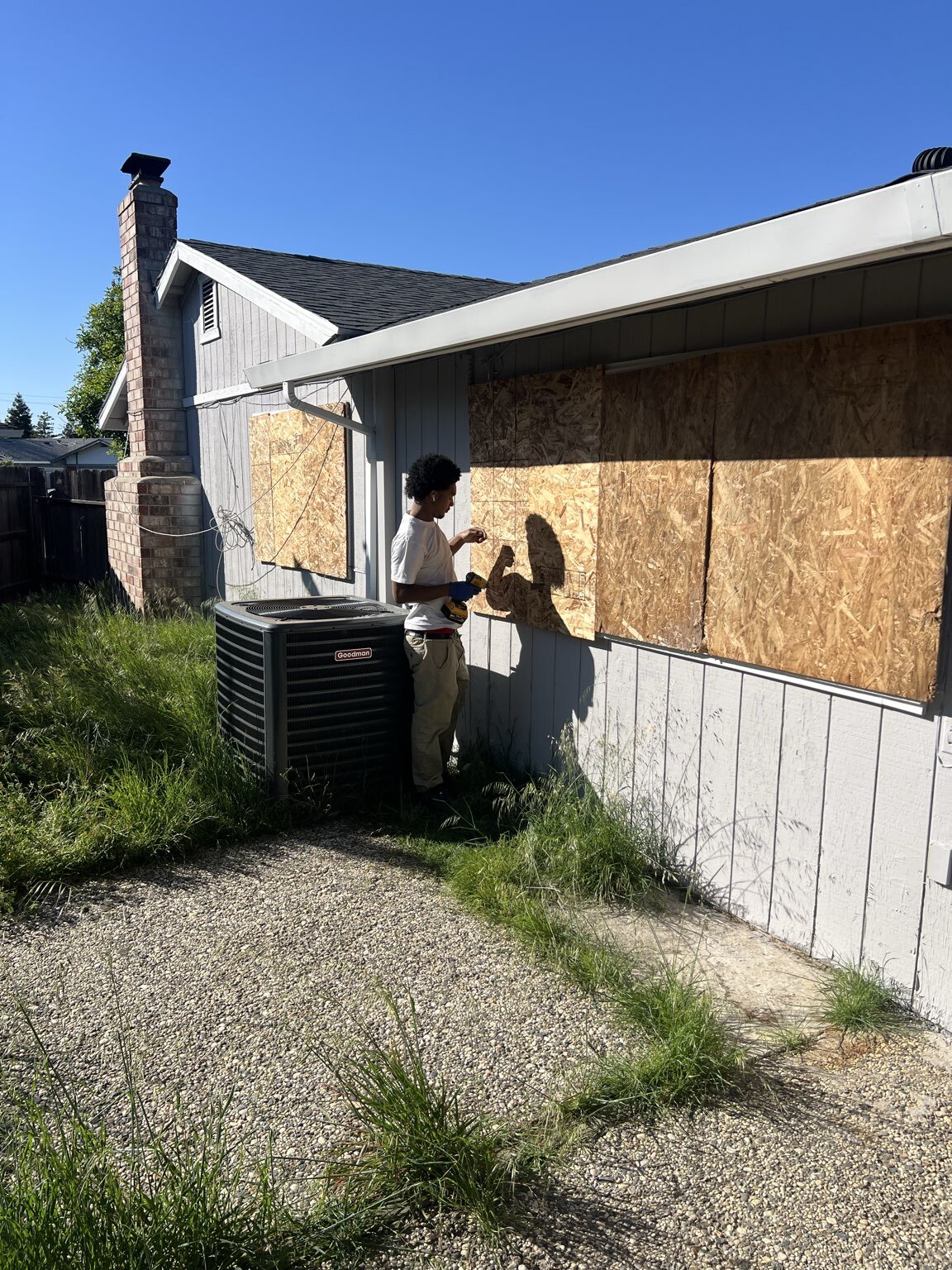
See what can happen after a seller transfers a rental as-is. The owner did not have to complete this work before selling, coordinate contractors, or remodel the house to compete for a retail buyer.
Potentially. Signing a purchase agreement does not necessarily eliminate every buyer exit right. A Rocklin cash buyer may still have contractual rights involving inspection, due diligence, title, disclosures, approval periods, financing-related provisions or other contingencies, depending on the agreement. The important question is not simply whether the contract has been signed. It is what rights and conditions remain after signing—and when those rights expire.
A cash buyer may be able to cancel after signing if the purchase agreement gives the buyer a contractual right to do so or if another legal or contractual basis applies. For example, the agreement may contain inspection, investigation, title, disclosure or other contingencies. Whether the buyer can cancel, whether earnest money is affected, and what remedies may be available to the seller depend on the actual contract, the status of contingencies, the facts of the transaction and applicable California law. “Cash” describes a funding structure; it does not automatically mean “no cancellation rights.”
A strong number can still leave the seller exposed if the agreement gives the buyer broad cancellation, inspection, assignment or extension rights.
Reviews cannot guarantee a future closing, but prior seller experiences can provide useful context about communication, professionalism and transaction follow-through.
A signature creates a contract. It does not tell you by itself how many contractual conditions remain between acceptance and closing.
Sellers sometimes focus almost entirely on the purchase price and closing date. Those terms matter, but they do not reveal the entire risk profile of the agreement.
A buyer may still have time to investigate the property, review documents, evaluate title, complete inspections or exercise other rights provided by the agreement. Some contracts may also contain extension, approval or assignment provisions.
That means two signed cash offers with the same price and closing date can create very different levels of certainty for the seller.
A buyer exercising a contractual cancellation right is different from a buyer simply refusing to perform without a contractual basis. The agreement and transaction facts determine which situation applies.
The agreement may make the purchase contingent on a stated event, investigation, review or approval. If the contractual conditions for cancellation are satisfied, the buyer may have a permitted exit.
Review Contract LanguageSome agreements give the buyer a defined investigation or review period. The scope of the buyer’s rights during that period depends on the language of the agreement.
Check Deadline + ScopeA request to reduce the price is not automatically the same thing as a contractual right to force a reduction. Whether the buyer can cancel if the seller refuses depends on the remaining contract rights.
Request ≠ Automatic RightTitle, disclosures, access, documentation or another contractual requirement may become disputed or remain incomplete. The agreement determines how those circumstances affect each party’s obligations.
Identify the ConditionIf a buyer fails to close when required and lacks a contractual basis for doing so, the issue may move beyond ordinary contingency cancellation and into potential default or remedy questions.
Potential Default IssueA change of mind does not by itself establish a contractual cancellation right. The next question is whether the agreement provides an available exit or whether nonperformance could have contractual consequences.
Contract ControlsInstead of treating certainty as all-or-nothing, track which material buyer rights remain open and what must occur before those rights expire or are removed.
Not automatically. Deposit consequences depend on the purchase agreement, the reason for cancellation, applicable contingencies, the timing of the cancellation and other transaction facts.
| Deposit Question | Why It Matters | What the Seller Should Verify |
|---|---|---|
| How Much? | The deposit can indicate financial commitment, but amount alone does not determine certainty. | Compare the amount with the purchase price and buyer’s remaining exit rights. |
| When Is It Due? | A deposit that has not yet been delivered provides different practical information from funds already held in escrow. | Verify the contractual deadline and whether the deposit was actually made. |
| Is It Refundable? | Refundability may depend on contingencies, cancellation provisions and other terms. | Do not assume “earnest money” automatically means the seller receives it after cancellation. |
| What Contingencies Remain? | A buyer may have contractual cancellation rights while certain contingencies remain open. | Read deposit consequences together with contingency language. |
| What If Buyer Defaults? | The agreement may address remedies, deposits, dispute procedures or limitations. | Obtain qualified advice before assuming the seller automatically keeps the deposit. |
This distinction matters when deciding whether the buyer has legitimately exercised a contract right or may have failed to perform an obligation.
A buyer may have a contractual right to cancel because a contingency, investigation period or other provision permits it under the circumstances.
If the buyer properly exercises that right, the transaction ending does not necessarily mean the buyer breached the contract.
A different issue can arise when the buyer fails to perform after contractual obligations become due and no applicable cancellation right or other justification exists.
Seller remedies are contract- and fact-specific. This is an area where legal advice may be appropriate before taking action.
A buyer can ask. Whether the seller must agree—or whether the buyer can cancel if the seller refuses—is a separate contract question.
Property inspections sometimes reveal conditions that neither side understood when the original agreement was signed. A buyer may respond by requesting a price adjustment or another amendment.
That does not necessarily mean the seller is required to accept the requested change. The seller can evaluate the request, the newly discovered condition and the buyer’s remaining contractual rights.
Sellers should be particularly careful when an offer was presented as an as-is cash purchase. Ask which known conditions were already reflected in the original price and what genuinely new information caused the requested change.
If the transaction involves assignment or another end-buyer structure, determine whether failure to locate that buyer actually gives the contracting party a right to cancel.
Start with the written contract. Assignment language and the buyer’s actual obligations should be reviewed separately.
Do not assume that inability to locate an assignee automatically creates a cancellation right. Determine what the agreement actually requires.
Consider the buyer’s due-diligence period, closing date, extension rights and other provisions that can affect how long the seller remains committed.
Two offers with the same headline price can create different seller outcomes when their deposits, contingencies and cancellation rights are different.
| Contract Factor | Possible Effect | Seller Risk | Evaluation Question |
|---|---|---|---|
| Broad Due Diligence | Buyer retains meaningful evaluation rights after signing. | Seller may remain exposed to cancellation or renegotiation longer. | “When does this right expire?” |
| Small Deposit | Less money is placed into escrow. | May provide less practical financial commitment, depending on the agreement. | “How much is deposited and when?” |
| Multiple Contingencies | More conditions remain between acceptance and closing. | Additional potential exit points may remain. | “Which contingencies are still open?” |
| Extension Rights | Closing may move beyond the initial target date. | Seller’s future plans may be less predictable. | “Who can extend and under what conditions?” |
| Assignment Dependency | Another investor may become part of the transaction path. | Additional uncertainty can exist if the original buyer depends economically on finding an end buyer. | “Can the contracting buyer close without an assignee?” |
| Clear Closing Path | Buyer has defined funding, deadlines and responsibilities. | Fewer unresolved variables may remain. | “What still has to happen before closing?” |
When a transaction fails, sellers may also face lost time, carrying costs and delayed plans—even when the eventual property value has not changed.
| Contract Event | Short-Term Impact | Longer-Term Impact |
|---|---|---|
| Early Permitted Cancellation | Transaction ends before closing. | Seller may need to restart the sale process but loses less time than with a late failure. |
| Late Cancellation | Seller’s expected closing disappears near the target date. | Moving plans, replacement housing or other financial decisions may be disrupted. |
| Repeated Price Reductions | Seller must decide whether to amend or resist the requested change. | Repeated renegotiation can erode the economic value of the original headline offer. |
| Closing Delay | Seller continues carrying the property longer. | Taxes, insurance, utilities, maintenance or other holding costs may continue. |
| Buyer Default Dispute | Closing may stop while parties determine rights and obligations. | Legal or contractual dispute resolution may create additional time and expense. |
| Successful Closing | Seller receives the agreed transaction outcome. | Seller can move forward without restarting the sale process. |
“When I look at a cash offer, I do not consider the transaction certain just because both parties signed the contract. I look at what still has to happen afterward. How long is due diligence? What contingencies remain? Has the deposit been made? Can the buyer extend? Is the price already accounting for the property’s known as-is condition? And does the buyer have a credible path to closing? The fewer unanswered questions that remain, the easier it is for a seller to understand what that offer is really worth.”
If you are reviewing an existing offer, compare it with an as-is cash offer from a local direct cash buyer using the same standards discussed on this page: buyer identity, funding path, deposit, due diligence, contingencies, assignment language, closing timeline and expected seller net. The goal is not simply to find the highest number—it is to understand the agreement behind that number.

A Rocklin property can become difficult to keep for many reasons: deferred maintenance, tenant problems, an inherited house, vacancy, liens, code concerns, major repairs, rising carrying costs, or simply a change in the owner’s plans. The mortgage, property taxes, insurance, utilities, maintenance, and repair exposure can continue even when the property is no longer serving the owner well.
Some Rocklin owners have the time, reserves, and desire to repair the house and pursue a traditional listing. Others live out of the area, inherited the property, are managing tenants or family occupants, are facing major repair estimates, or simply no longer want to invest more time and money before selling.
A direct as-is sale offers another path. Instead of first trying to create a perfect vacant property, the owner can compare the likely net outcome of continuing to hold the rental against an offer from a buyer who understands tenant-occupied and problem-property transactions.
Darren’s experience is based on actual Northern California transactions involving tenants, deferred maintenance, inherited ownership, vacancy, difficult communication, and properties that were not ready for traditional listing photos or repeated buyer showings.
A traditional listing may make sense when the owner has time, repair money, easy access, and a property that can compete well with retail inventory. A local cash buyer may be worth comparing when the priority is certainty, speed, fewer contingencies, or a no-repairs as-is sale.
That comparison can be especially useful when an owner wants to sell a rental property as-is, sell a house with tenants, sell a tenant-occupied house, sell a rental property with tenants, sell a house with a non-paying tenant, sell a rental with a non-paying tenant, or simply sell a house fast without first renovating it for the market.
The practical question is not whether every seller should choose a direct cash buyer. It is whether the net, timeline, workload, and certainty of an as-is cash buyer or local as-is home buyer compare favorably with repairing and listing the Rocklin property.
Not every tenant-occupied transaction becomes simple the moment escrow closes. In this real Sacramento-area case, a tenant broke back into the property after Darren had already purchased it.
This behind-the-scenes video shows why experience matters when selling a difficult property as-is. Unexpected access problems, belongings, deferred repairs, communication issues, tenant concerns, and post-closing complications require practical judgment—not polished promises.
The former owner had already completed the sale. Darren took responsibility for what happened afterward, illustrating one reason a direct cash buyer with real difficult-property experience can be valuable when a Rocklin owner wants to transfer the property as-is and move forward.
Rocklin sellers should not have to rely only on polished claims. These videos show actual tenant-occupied, repair-heavy, and difficult properties Darren has worked with throughout the greater Sacramento region.
See what can happen after a seller transfers a rental as-is. The owner did not have to complete this work before selling, coordinate contractors, or remodel the house to compete for a retail buyer.
This occupied property required substantial work. The seller was able to transfer the house without first removing everything, completing renovations, or making it retail-ready.
Walk through an actual property with Darren and see the kinds of conditions an as-is cash buyer may take on after closing. A Rocklin seller does not have to make the property perfect before comparing a no-repairs as-is sale with a traditional listing.
“The most important proof is not a promise that every property situation will be easy. It is showing that the buyer has already worked through difficult occupants, deferred maintenance, belongings, repairs, and real people who needed a respectful solution.”Darren Brown — Licensed California Broker and Local Cash Buyer
These images come from actual Northern California properties. They demonstrate why some Rocklin owners compare a no-repairs as-is sale with financing repairs, managing contractors, supervising a cleanout, preparing for showings, and waiting for a conventional sale.

A real occupied-property transaction demonstrating the condition and improvement work a buyer may inherit after the seller closes.
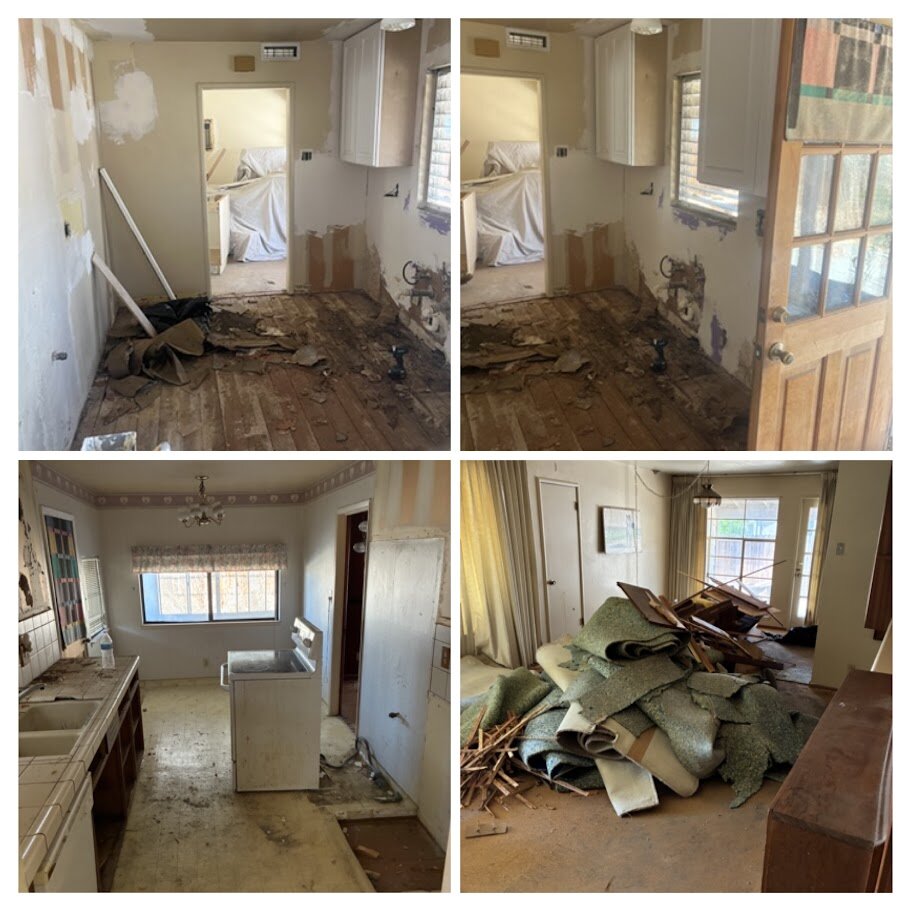
Work that occurred after the purchase—not a list of projects the former owner had to complete before selling.

A property with repairs and deferred maintenance that became a candidate for a direct as-is purchase.
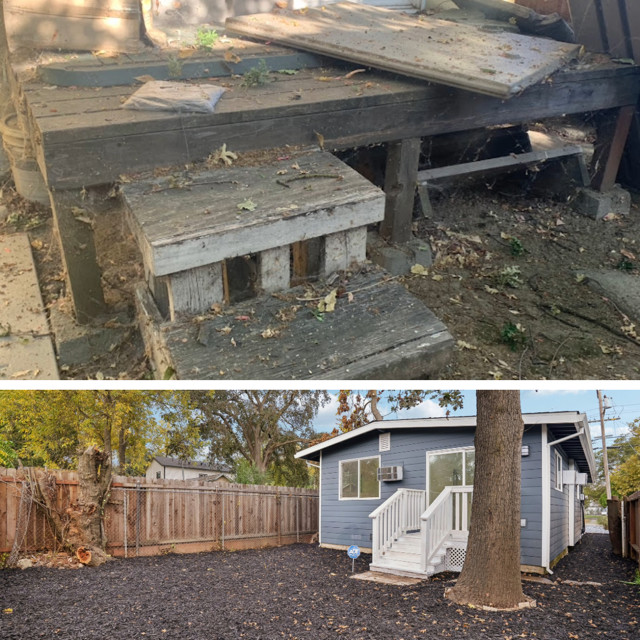
Deferred repairs can become another financial burden when a property no longer fits the owner’s plans or budget.
These sellers describe their own experiences working directly with Darren through real property transactions—useful proof for Rocklin owners comparing a local cash buyer with a traditional listing.
A homeowner shares firsthand feedback about working with Darren during the sale of a property.
Additional seller proof showing the communication, process, and personal experience behind a direct transaction with Darren.
A Rocklin homeowner may be handing over a valuable property, access details, tenant information, repair issues, and years of equity. Before signing an agreement, independently verify the cash buyer’s identity, licensing, professional background, business registration, community involvement, and transaction experience.
Darren Brown combines direct cash-buying experience with a professional California real estate brokerage background.
View Broker Documentation →Veteran-owned service centered on accountability, direct communication, follow-through, and doing what was agreed upon.
View Military Retirement Proof →Darren’s business has documentation supporting its Disabled Veteran Business Enterprise certification.
View DVBE Certification →Sellers can review the California Secretary of State filing associated with Darren’s operating business.
View State Business Filing →Review the independent Better Business Bureau profile for Darren Buys Homes Cash before accepting an offer.
View BBB Business Profile →Darren maintains a public connection to the Sacramento-region professional and business community.
View Chamber Listing →Review additional seller feedback, difficult property situations, and direct as-is sale experiences involving Darren Buys Homes Cash.
Review Seller Testimonials →Examine Darren’s professional background, business identity, and supporting trust documentation in one place.
Review Professional Credentials →Use the Seller Trust Center to evaluate the company, process, proof, and direct cash-buying experience before deciding who to work with.
Visit The Seller Trust Center →Another homeowner explains what it was like to work with Darren. Real seller feedback gives Rocklin property owners a better basis for evaluating a direct cash buyer before making a decision.
The right decision depends on property condition, occupancy, repair costs, title issues, carrying costs, available reserves, timing, and how much additional work the owner is prepared to accept.
This may make sense when the Rocklin owner has adequate reserves, still wants the property, and has a realistic plan for repairs, tenants, maintenance, and future carrying costs.
Some owners invest in repairs, cleanout, staging, and preparation so the property can compete for a traditional retail buyer.
A direct sale may be worth evaluating when the Rocklin owner values certainty, wants to reduce seller workload, or does not want to complete repairs, cleaning, or remodeling before selling.
A Rocklin owner can compare the likely net from a direct as-is cash offer with continuing to hold the property, completing repairs, preparing for showings, paying commissions and concessions, or attempting a traditional listing. The goal is to understand the difference between a cash buyer vs. listing—not to assume one option is automatically better.
Selling a Rocklin house as-is involves more than deciding whether an offer sounds high or low. These six seller resources walk through the complete decision—from understanding current-condition value and cash-offer math to evaluating the buyer, contract certainty and the amount you may actually keep at closing.
Understand what current-condition value means when the house may need repairs, updates, cleanup or other work the next owner will have to absorb.
See how current-condition value, repairs, resale costs, holding expenses, transaction costs and buyer risk can influence an as-is cash offer.
Put two offers side by side and compare expected seller net, proof of funds, earnest money, contingencies, assignment rights, timing and closing certainty.
Understand the difference between a buyer who intends to acquire the property and a transaction model that may involve assigning contractual rights to another investor.
Learn why a signed cash contract may still contain inspection rights, contingencies, due-diligence periods, cancellation provisions or other conditions before closing.
Finish the comparison by accounting for seller-paid costs, repairs, commissions or fees, credits, carrying costs, mortgage payoff, liens and other amounts that can affect final proceeds.
A purchase agreement becomes easier to evaluate when the seller separates what has already happened from what the buyer can still do before closing.
This is not a legal ranking. It is a practical way for sellers to think about how many unresolved conditions remain between the current moment and closing.
The parties have an agreement, but investigation periods, contingencies and other conditions may still remain.
Earnest money has been delivered as required, adding another factual indicator of performance.
Inspections, property review and document investigation may be substantially complete.
Fewer unresolved contingencies or discretionary review rights remain under the agreement.
Escrow, title, funds, documents and possession are positioned for the scheduled closing.
First determine what the buyer is actually requesting and what contract provision they are relying on.
A buyer might send a cancellation notice, request a price reduction, ask for an extension or simply communicate that they no longer want to proceed. Those are different events.
The seller’s response should depend on the actual agreement, the status of contingencies, whether deadlines have passed, whether required notices were given and whether the seller has completed their own contractual obligations.
This is not the moment to rely on assumptions about what “cash buyers normally do.” Review the contract and obtain qualified advice when the rights or financial stakes are disputed.
The goal is not to turn the seller into a contract lawyer. It is to organize the transaction facts before making a financial decision.
Is the buyer cancelling, asking for a price change, asking for more time or raising a specific contract issue?
Determine which contingency, review right, deadline or other clause may apply.
Review whether the relevant right remains open and whether required notices or deposits were timely.
Accept, negotiate, reject, seek performance or obtain legal guidance depending on the agreement and facts.
Sellers sometimes assume that if the buyer cancels, escrow will simply send the earnest money to the seller. The transaction may be more complicated than that.
No score guarantees closing. The purpose is to identify how many material transaction dependencies remain.
| Certainty Factor | Lower Certainty Indicator | Stronger Certainty Indicator | Seller Question |
|---|---|---|---|
| Earnest Money | Deposit not yet delivered or relatively small in relation to the transaction. | Agreed deposit delivered within the required timeframe. | “Has the deposit actually been received?” |
| Due Diligence | Long or broadly discretionary review period. | Defined review period with major evaluation completed. | “When does the buyer’s review right end?” |
| Property Condition | Buyer has not evaluated known major condition issues. | Known as-is conditions were evaluated before or early in the agreement. | “What known repairs are already reflected in the price?” |
| Funding | Funding source or approvals remain unclear. | Buyer has a defined and credible acquisition funding path. | “What still has to happen for funds to reach escrow?” |
| Assignment | Buyer depends economically on locating another purchaser. | Contracting buyer can explain its obligations and backup closing path. | “Can you close if an assignment does not occur?” |
| Extensions | Buyer retains broad or unclear extension rights. | Closing date and extension conditions are clearly defined. | “Who can move the closing date?” |
| Remaining Contingencies | Multiple material contingencies remain open. | Material buyer exit rights have narrowed substantially. | “What can still cause this contract to end before closing?” |
A cash offer can remove mortgage-financing dependency, but it does not automatically remove inspection rights, due diligence, assignment provisions, title issues, cancellation language or other contract conditions. Sellers get a clearer picture by tracking what the buyer still has the right to do after signing. The closer the transaction gets to closing with fewer unresolved dependencies, the easier it becomes to evaluate the practical certainty of the agreement.
Cancellation rights are only one part of seller protection. Buyer credibility, contract structure, assignment, proof of funds and offer comparison all affect the transaction decision.
Review the matching nearby contract-certainty resource covering buyer cancellation and seller risk.
Evaluate buyer identity, credibility and transaction terms before relying on a promised cash closing.
Review buyer-verification questions involving funds, contract terms, contingencies and performance.
Review identity, credentials, funding, contract language and other signs of a credible local buyer.
Review what remains after signing: deposit, due diligence, contingencies, assignment, extension rights, funding and the conditions required for closing. If you want to compare an existing contract with an as-is cash offer from a local direct cash buyer, evaluate both transactions by the same standard—the expected seller net and the number of unresolved steps remaining before the proceeds reach you.