

Look for enough information to identify who appears to own or control the documented funds. If that differs from the buyer named in the agreement, ask how the two are connected.
Citrus Heights Cash Buyer Verification Guide
How to Verify Proof of Funds From a Citrus Heights Cash Buyer
A buyer saying “I pay cash” is not the same as a buyer demonstrating financial capacity. Before accepting a direct cash offer, a Citrus Heights homeowner can examine the proof of funds, compare it with the buyer named in the contract, and ask reasonable questions about anything that does not line up.
Buyer Identity
Available Funds
Document Date
Account Evidence
Contract Match
Transaction History
Verify the Buyer, Not the Sales Pitch
“Cash Buyer” Is a Description. Proof Is Evidence.
A direct cash offer can remove financing and appraisal issues that may exist in a financed transaction. But the word cash by itself tells the seller very little about whether the person or company making the offer actually controls, or has credible access to, enough money to perform.
That is why proof of funds matters.
Depending on the transaction, proof might include a recent bank or financial-account statement, a verification letter from a financial institution, or other credible documentation supporting the buyer’s claimed ability to fund the purchase.
Sensitive account information may reasonably be redacted. The goal is not to obtain a stranger’s private banking information. The goal is to obtain enough credible information to evaluate whether the buyer’s financial claim is consistent with the offer being presented.
Proof of Funds Is Due Diligence—not a Guarantee
A legitimate proof-of-funds document can support the buyer’s claimed financial capacity. It does not by itself prove that the buyer will close, that funds will remain available, or that the contract contains no inspection, cancellation, assignment or other provisions that matter to the seller.
Quick Answer
To verify proof of funds, check who owns or controls the documented
funds, whether the amount reasonably supports the purchase, how recent
the document is, whether the source appears credible, and whether the
names and entities are consistent with the purchase agreement.
If something does not match, ask the buyer to explain it before you accept the offer. A third-party funding source or different entity is not automatically a problem, but the seller should understand who is actually buying the property and how the purchase is expected to be funded.
Real Seller Experience • Sacramento Area
Documents Matter. Actual Performance Matters Too.
Proof of funds helps evaluate financial capacity before acceptance. A buyer’s completed transactions and real seller experiences provide another kind of evidence: whether the buyer has demonstrated the ability to perform after an agreement is signed.
Proof Beyond the Document
Verified Seller Reviews
Start Here
The 5-Minute Proof-of-Funds Check
You do not need to become a forensic accountant to perform a useful first review. Start with five basic questions.
Seller Verification Screen
FIVE QUESTIONS BEFORE YOU RELY ON THE DOCUMENT
1
Who Is Named?
Identify the person or entity associated with the funds and compare that information with the buyer named in the offer.
2
How Much Is Shown?
Determine whether the documented amount reasonably supports the proposed purchase and expected transaction requirements.
3
How Recent Is It?
A current document is generally more informative than an old statement that says little about present financial capacity.
4
Where Did It Come From?
Look for enough identifying information to understand the apparent financial institution or credible source behind the evidence.
5
Does It Match the Deal?
Compare the proof with the purchase agreement, buyer identity, purchase price and any explanation of how the acquisition will be funded.
One Mismatch Does Not Automatically Mean the Buyer Is Unqualified
A buyer may purchase through an entity, use a funding partner, move money between accounts or have another legitimate funding structure. The important point is that the seller should not have to guess why the documents and the contract are different. Ask for an explanation and supporting evidence when appropriate.
Go Beyond “Document Received”
The Proof-of-Funds Verification Ladder
Receiving a PDF, screenshot or letter should be the beginning of the review—not the end. Each step answers a different seller question.
Seven Levels of Seller Due Diligence
DOCUMENT RECEIVED → TRANSACTION CONFIDENCE
01
Document Received
You have actual evidence to review rather than only a verbal statement that the buyer has cash.
02
Buyer Identity
Determine whose name or entity appears on the evidence and whether that relationship makes sense in light of the purchase agreement.
03
Available Funds
Look for evidence of funds reasonably sufficient to support the proposed purchase rather than relying on the label “cash buyer.”
04
Document Freshness
Check the date. Older documentation may be genuine but provide less useful information about the buyer’s present financial position.
05
Source Credibility
Look for sufficient information to understand where the evidence came from and whether reasonable verification is possible.
06
Contract Consistency
Compare the financial evidence with the buyer name, purchase price, assignment provisions and other relevant terms in the agreement.
07
Performance Evidence
Consider whether the buyer can also demonstrate completed purchases, seller experiences or other evidence of actual transaction performance.
Know the Limit of the Document
What Proof of Funds Does—and Does Not—Prove
What It Can Support
Financial Capacity
- That funds apparently existed as of the document date.
- That the documented amount may support the proposed purchase.
- That a person or entity appears associated with those funds.
- That the buyer’s cash claim has some documentary support.
What It Does Not Automatically Prove
Transaction Performance
- That the buyer will definitely close.
- That the funds will remain available until closing.
- That the buyer has waived inspection or cancellation rights.
- That the buyer will not seek a later price reduction.
- That the contract cannot be assigned.
- That the buyer has successfully closed similar purchases before.
Proof of Funds Answers One Important Question—not Every Question
Financial capacity matters. But seller due diligence should also include the purchase agreement, deposit, contingency structure, closing timeline, assignment language and evidence of the buyer’s prior performance.
Read the Evidence
What Should You Look for on the Proof-of-Funds Document?
Proof of funds does not have one universal format. A seller may encounter different types of documentation depending on the buyer and funding structure. Rather than judging a document by appearance alone, look for the information that helps answer the underlying questions.
The evidence should reasonably support the financial requirements of the contemplated purchase. A document showing substantially less than needed deserves an explanation.
Look for a date that allows you to understand when the financial information was represented as accurate.
There should generally be enough information to understand the apparent source of the financial evidence, even when sensitive account details are appropriately redacted.
Redaction Is Not Automatically Suspicious
Account numbers and other sensitive financial information can reasonably be concealed. What matters is whether the remaining document provides enough information to evaluate the buyer’s claim without requiring unnecessary disclosure of private financial data.
The Consistency Test
The Document, Contract and Buyer Should Tell a Coherent Story
Three-Part Seller Verification
DOCUMENT → CONTRACT → BUYER
Evidence
The Document
Whose funds are shown, how much is supported and when was the evidence issued?
→
Legal Transaction
The Contract
Who is named as buyer and what does the agreement say about financing, assignment, contingencies and closing?
→
Execution
The Buyer
Can the buyer clearly explain the funding structure and demonstrate evidence of completed transactions?
Consistency Is More Useful Than a Fancy-Looking PDF
A polished document does not substitute for a coherent transaction. If the proof of funds belongs to one party, the contract names another, and the person negotiating the deal cannot clearly explain the relationship, the seller has a reasonable basis to ask more questions.
Practical Verification
Verify the Evidence Without Asking for Private Banking Data
Sellers generally do not need full account numbers, transaction histories or unrestricted access to a buyer’s financial records. Verification should be proportional to the decision being made.
If a financial institution or other issuer is identified, use independently obtained contact information when verification is appropriate rather than relying blindly on contact details supplied inside an unfamiliar document. The purpose is to confirm credibility—not to request confidential account information the institution is not authorized to disclose.
If the buyer uses a third-party funding source, ask the buyer to explain that structure and provide evidence appropriate to it. What matters is understanding whether the represented funding source reasonably supports the transaction.
A Reasonable Buyer Should Expect Reasonable Questions
A homeowner is being asked to sign a contract involving one of their largest assets. Asking who the buyer is, how the purchase will be funded, and what evidence supports that claim is ordinary transaction due diligence.
Next: Look Beyond the Bank Balance
A Buyer Can Show Money and Still Be the Wrong Offer
Financial capacity is only one part of evaluating a Citrus Heights cash buyer. The next step is to examine the warning signs that deserve further investigation and then compare proof of funds with the buyer’s deposit, contract terms, assignment rights, inspection period and evidence of actual closing performance.
That is where the seller moves from asking “Does this buyer appear to have access to money?” to the more important question: “How strong is this offer as a complete transaction?”
Real Transaction • Real Person • Real Property
Difficult Properties Are About More Than the House
Property condition is only one part of a difficult sale. Occupancy, communication, access, repairs, utilities, timing, belongings, and the people affected by the transaction can all matter.
The Citrus Heights Butternut Drive transaction is one example. The property had been occupied by a non-paying tenant for approximately 18 months. When Darren purchased the house, it was without working electricity and air conditioning. After closing, utilities and essential conditions were addressed and a short-term rental arrangement was established with the occupant.
That is a tenant-related transaction, but the larger lesson applies beyond rental property: a difficult sale often requires understanding the entire situation rather than looking only at the physical house.
Butternut Drive, Citrus Heights — real occupant testimonial following
Darren’s purchase of a difficult rental property.
Why This Proof Belongs on Difficult-Property Pages
The value of this transaction is not simply that a tenant was involved. It demonstrates Darren’s willingness to evaluate properties with multiple overlapping complications rather than requiring the seller to solve every issue before a sale can be considered.
- Occupied property
- Long-term nonpayment
- Utility problems
- No working air conditioning at acquisition
- Property-condition concerns
- Post-closing occupant coordination
- Direct as-is purchase
Citrus Heights • Real Transactions • Verified Local Experience
Real Experience With Difficult Citrus Heights Property Situations
Every difficult property has a different story. Some houses need major repairs. Others involve tenants, deferred maintenance, unwanted belongings, title complications, code concerns, vacancy, inherited ownership, or simply an owner who does not want to spend additional time and money preparing the property for a traditional sale.
Darren Brown’s approach is to evaluate the property and the seller’s situation as they actually exist. That means an owner can compare a direct cash offer without first remodeling, cleaning out, making the house retail-ready, or pretending difficult issues are not there.
The transaction proof below is included for one reason: to show the type of real-world property situations Darren has personally worked through. It is not a promise that every transaction will be identical. It is documented experience that sellers can evaluate before deciding who they want to work with.
California Licensed Real Estate Broker
Retired U.S. Air Force Veteran
Veteran-Owned Local Business
Direct As-Is Cash Buyer
Real Sacramento-Area Transactions
A Broader As-Is Selling Option
You Do Not Have To Make a Difficult Property Perfect Before Comparing Your Options
Traditional retail selling often works best when a property can be prepared, photographed, shown repeatedly, inspected, appraised, and financed without significant complications. Many Citrus Heights houses fit that model.
Others do not.
An owner may be dealing with repairs, an occupied house, accumulated belongings, an inherited property, deferred maintenance, title questions, code concerns, vacancy, vandalism, an aging rental, or another circumstance that makes conventional preparation less attractive.
A direct as-is sale provides another number and another strategy to compare. It does not automatically mean a cash offer is the best option. It means the seller can evaluate the property without first paying to transform it into a different property.
Property Condition
Evaluate the house as it sits, including deferred maintenance, damage, cleanup, major repairs, or outdated systems.
Occupancy & Access
Consider tenants, relatives, occupants, belongings, vacancy, limited access, or other practical issues affecting the sale.
Seller Priorities
Compare net proceeds, required investment, timeline, certainty, convenience, and transaction risk—not simply the advertised sale price.
Real Difficult-Property Case File
When An Unexpected Occupancy Problem Happened After The Sale
Difficult-property transactions are not always complicated because of repairs alone. In this real Sacramento-area transaction, a former tenant broke back into the property after Darren had already purchased it.
The former seller had already completed the transaction. Darren was then responsible for dealing with the unexpected access and security issue after ownership transferred.
This case is useful beyond tenant-related pages because it demonstrates what it means for a direct buyer to assume the practical risks that may remain after a difficult property closes.
Sellers evaluating an as-is buyer should consider more than the offer amount. They should also consider whether the buyer understands occupancy, belongings, access, deferred repairs, security, cleanup, title coordination, and unexpected problems.
Watch Real Property Proof
Difficult Properties And As-Is Experience You Can See
Sellers should not have to rely only on polished marketing claims. These videos show actual Sacramento-area properties Darren purchased and worked on after closing.
Flaum Court Work In Progress
See what happened after this property transferred as-is. The former owner did not have to complete this work before selling, coordinate the renovation, or prepare the house to compete for a retail buyer.
Circle Parkway Difficult Property
This tenant-occupied hoarder property required substantial work. The seller transferred the property without first removing everything, completing renovations, or making the house retail-ready.
See The Types Of Properties Darren Buys As-Is
Walk through an actual property with Darren and see the types of physical conditions a direct as-is cash buyer may take on after closing. A seller does not have to make a difficult house perfect before discussing a sale.
“The most important proof is not a promise that every difficult property will be easy. It is showing that the buyer has already worked through real occupancy problems, deferred maintenance, belongings, repairs, property-condition issues, and unexpected situations.”Darren Brown — Licensed California Broker and Local Cash Buyer
Real As-Is Transaction Evidence
The Sellers Did Not Have To Make These Repairs First
These images come from actual Sacramento-area transactions. They demonstrate why property owners may compare an as-is sale with spending additional money on repairs, cleanout, contractor management, and retail preparation.

Flaum Court Kitchen
A real transaction showing improvement work that became the buyer’s responsibility after the seller completed the sale.
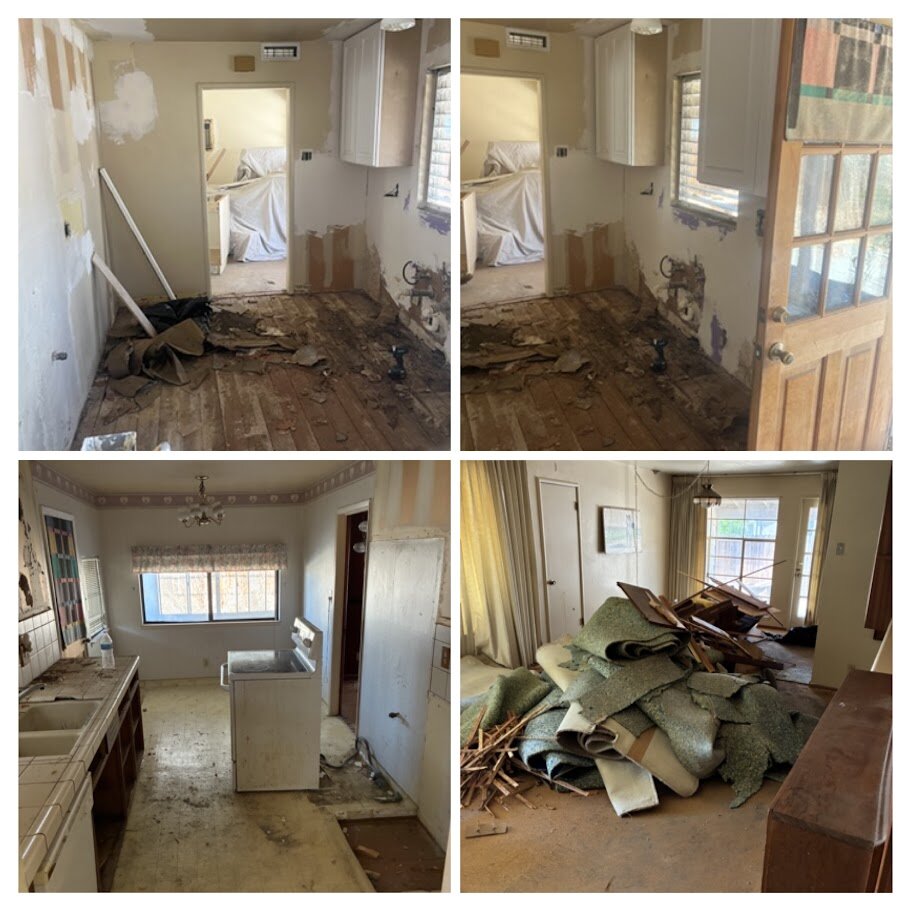
Circle Parkway In Progress
Work completed after the purchase—not a list of projects the former owner had to finish before selling.

American Avenue Property
A real Sacramento-area property with repairs and deferred maintenance that became a candidate for a direct as-is purchase.
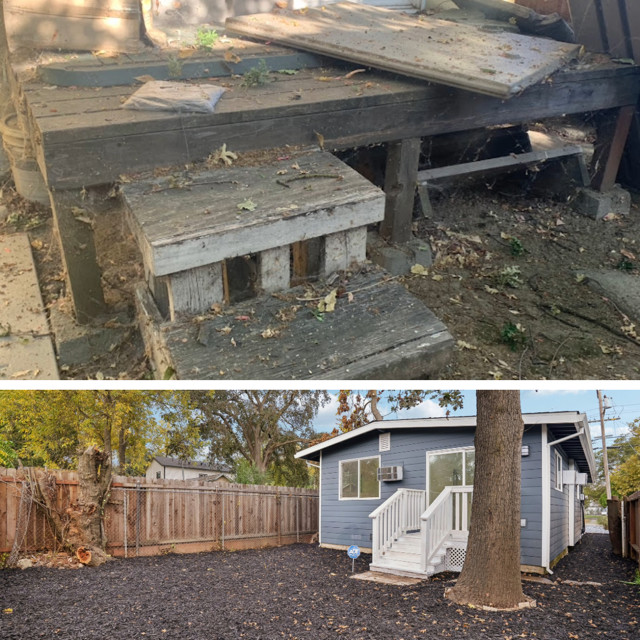
Safety And Repair Issues
Safety problems and deferred maintenance can create another layer of expense when an owner is deciding whether to repair or sell the property in its present condition.
Real Seller Experiences
Hear From Homeowners Who Worked With Darren
These homeowners describe their own experiences working directly with Darren through real property transactions.
Seller Story: A Direct, Straightforward Sale
A homeowner shares firsthand feedback about working with Darren during a real property sale.
Seller Story: Communication Through Closing
Additional seller proof showing the communication, transaction process, and personal experience behind a direct sale with Darren.
Do Not Just Trust The Claims—Verify The Buyer
Whether a property has repairs, tenants, liens, deferred maintenance, code issues, title complications, unwanted belongings, vacancy, inherited ownership, or another difficult condition, the buyer should still be independently evaluated.
Before signing an agreement, sellers can verify Darren’s licensing, professional background, business registration, veteran status, community involvement, seller experiences, and transaction history.
Licensed California Real Estate Broker
Darren Brown combines direct cash home buying experience with a professional California real estate brokerage background.
View Broker Documentation →Retired U.S. Air Force Veteran
Veteran-owned service centered on accountability, direct communication, follow-through, and doing what was agreed upon.
View Military Retirement Proof →DVBE-Certified Business Owner
Darren’s business has documentation supporting its Disabled Veteran Business Enterprise certification.
View DVBE Certification →California Business Registration
Sellers can review the California Secretary of State filing associated with Darren’s operating business.
View State Business Filing →A+ BBB-Rated Business
Review the independent Better Business Bureau profile for Darren Buys Homes Cash before accepting an offer.
View BBB Business Profile →Sacramento Metro Chamber Member
Darren maintains a public connection to the Sacramento region’s professional and business community.
View Chamber Listing →Real Seller Experiences
Review additional seller feedback, property situations, and experiences involving Darren Buys Homes Cash.
Review Seller Testimonials →Professional Credentials
Examine Darren’s professional background, business identity, and supporting trust documentation in one place.
Review Professional Credentials →Sacramento Seller Trust Center
Use the Seller Trust Center to evaluate the company, process, transaction proof, and cash home buying experience before deciding.
Visit The Seller Trust Center →Seller Story: Why They Chose Darren
Another homeowner explains what it was like to work directly with Darren. Real seller feedback gives a property owner a better basis for evaluating the person behind the offer before making a decision.
Compare The Real Paths Forward
Three Ways To Approach A Difficult Citrus Heights Property
The strongest option depends on property condition, available equity, repair costs, occupancy, title issues, timing, available cash, likely net proceeds, and how much additional work the owner wants to take on before selling.
1
Keep The Property And Resolve The Problems
Continued ownership may make sense when the property still fits the owner’s goals and there is enough time, money, and willingness to address the problems before reconsidering a sale.
- Continue paying carrying expenses
- Address repairs or deferred maintenance
- Resolve occupancy or access issues when applicable
- Work through title, code, or documentation concerns
- Reevaluate selling later
2
Prepare The Property For A Traditional Sale
A conventional listing may be appropriate when the owner has the resources and time to prepare the property and wants broad exposure to retail buyers.
- Complete needed repairs or improvements
- Clean out and prepare the property
- Coordinate access and showings
- Navigate inspections and appraisal
- Accept the timeline and financing variables of a retail sale
3
Compare A Direct As-Is Cash Home Buyer Offer
A direct as-is sale may be worth evaluating when the owner wants a defined alternative without first making the property vacant, repaired, remodeled, cleaned out, or retail-ready.
- Evaluate the property in its present condition
- Skip repairs and remodeling by agreement
- Avoid repeated traditional buyer showings
- Account for difficult conditions in the offer
- Choose a closing timeline that fits the transaction
You Do Not Have To Decide Before You Know The Numbers
Darren can evaluate a Citrus Heights property in its current condition and provide a direct as-is option that can be compared with keeping the house, completing repairs, resolving other property issues, or preparing for a traditional listing.
Citrus Heights Seller Resource Center
More Citrus Heights Guides For Difficult Property And Landlord Situations
Use these local resources to compare selling options by property condition, tenant situation, ownership challenge, timing, and the type of sale you are considering.
Built from published Citrus Heights pages already present in the site sitemap.
These resources cover tenant-occupied rentals, non-paying tenants, landlord exits,
out-of-state ownership, squatters, hoarder properties, code violations,
delinquent taxes, foreclosure, repairs, vacant homes, inherited houses,
cash-sale timing, and buyer verification.
Local Seller Overview
Citrus Heights Local Hub
Start with the main Citrus Heights service-area page for local selling options and property situations.
Read Citrus Heights Guide → Landlord & Tenant ProblemsRental Property With Non-Paying Tenants
A focused Citrus Heights guide for landlords dealing with missed rent while considering an as-is sale.
Read Citrus Heights Guide → Local Case StudyReal 7-Day Citrus Heights Rental Case Study
See a real Citrus Heights rental-property case study involving non-paying tenants and a seven-day closing.
Read Citrus Heights Guide → Tenant-Occupied PropertySell A Tenant-Occupied House
Review options for selling a Citrus Heights house while a tenant is still occupying the property.
Read Citrus Heights Guide → Tenant Exit QuestionsWhat If My Tenant Won’t Leave?
Understand the selling questions that arise when a Citrus Heights tenant will not leave before a planned sale.
Read Citrus Heights Guide → Landlord Exit StrategyTired Of Being A Landlord?
A Citrus Heights resource for owners comparing continued management with selling a rental property as-is.
Read Citrus Heights Guide → Remote OwnershipSell An Out-Of-State Rental
For landlords who own a Citrus Heights rental from outside the area and want to compare an as-is exit.
Read Citrus Heights Guide → Rental Property SaleSell A Rental Property Fast
A broader Citrus Heights landlord resource covering a direct cash-buyer option for rental property.
Read Citrus Heights Guide → Unauthorized OccupancySell A Squatter House
Explore a Citrus Heights-specific resource for selling a house with squatters or unauthorized occupants.
Read Citrus Heights Guide → Hoarder & Heavy CleanoutSell A Hoarder House Without Cleaning
For Citrus Heights properties with extensive belongings, debris, or cleanout needs that may be sold as-is.
Read Citrus Heights Guide → Code & Property ConditionSell A House With Code Violations
A Citrus Heights guide for owners facing code issues while evaluating an as-is sale.
Read Citrus Heights Guide → Tax ProblemsSell With Delinquent Property Taxes
Review options when delinquent property taxes are part of a Citrus Heights home sale.
Read Citrus Heights Guide → ForeclosureSell Before Foreclosure
A Citrus Heights resource for owners considering a sale before a foreclosure timeline advances further.
Read Citrus Heights Guide → As-Is / No RepairsSell My House Without Repairs
Compare selling a Citrus Heights property in its present condition without completing repairs first.
Read Citrus Heights Guide → Repair DecisionDo I Need To Fix My House Before Selling?
A decision-focused Citrus Heights resource for weighing repair costs against selling in current condition.
Read Citrus Heights Guide → Fixer-UpperSell A Fixer-Upper House As-Is
For Citrus Heights homes with deferred maintenance, dated systems, or larger repair needs.
Read Citrus Heights Guide → As-Is Seller GuideCan I Sell My House As-Is?
A Citrus Heights-specific explanation of what an as-is sale can mean for repairs, preparation, and buyer expectations.
Read Citrus Heights Guide → Vacant PropertySell A Vacant House
Review a direct as-is option for an empty Citrus Heights property that may be costing money to hold.
Read Citrus Heights Guide → Inherited PropertySell An Inherited House
A Citrus Heights resource for owners evaluating the sale of an inherited house.
Read Citrus Heights Guide → Cash Sale ProcessHow Does Selling A House For Cash Work?
Learn the basic Citrus Heights cash-sale process and what sellers can compare before accepting an offer.
Read Citrus Heights Guide → Closing TimelineHow Fast Can I Sell For Cash?
A Citrus Heights-specific resource focused on timing, process, and what can affect a faster cash closing.
Read Citrus Heights Guide → Buyer VerificationLegit Cash Home Buyers In Citrus Heights
Use this local guide when comparing cash buyers and checking experience, credibility, and the proposed transaction.
Read Citrus Heights Guide → Local As-Is Cash BuyerWe Buy Houses In Citrus Heights
A Citrus Heights overview for owners comparing a direct as-is cash-buyer sale with other selling routes.
Read Citrus Heights Guide → Cash Buyer OverviewCash Buyers In Citrus Heights
Additional Citrus Heights information for sellers researching local cash-buyer options.
Read Citrus Heights Guide →
When to Ask More Questions
Seven Proof-of-Funds Warning Signs Worth Investigating
A warning sign is not the same as proof that something is wrong. It is a reason to slow down, ask a precise question and make sure the explanation fits the transaction.
Seller Verification Screen
DON’T PANIC. VERIFY.
Buyer Name Does Not Match
The account, letter or funding evidence names someone different from the buyer identified in the purchase agreement.
Funds Appear Insufficient
The documented amount does not appear large enough to support the purchase price or explained funding structure.
The Document Is Old
A stale statement may once have been accurate but say little about what is available for the current transaction.
Source Is Difficult to Identify
There is not enough information to understand where the evidence came from or who issued it.
Screenshot With Little Context
A cropped image may show a number without enough surrounding information to understand whose account it is or when it was captured.
Third-Party Funds Are Unexplained
The buyer relies on another person, company or funding source but cannot clearly explain the relationship.
Reasonable Verification Is Refused
The buyer expects the seller to rely on the cash claim while resisting ordinary questions about funding and transaction structure.
Context Matters
A Mismatch Can Be a Red Flag—or a Perfectly Reasonable Structure
More Investigation May Be Appropriate When
The Story Keeps Changing
- The buyer cannot identify who actually controls the funds.
- The purchase entity changes repeatedly without explanation.
- The buyer’s explanation conflicts with the written agreement.
- The represented funding amount does not support the purchase.
- The buyer refuses reasonable documentation requests.
A Different Name May Be Reasonable When
The Relationship Can Be Explained
- The buyer purchases through a related LLC or entity.
- A partner or investment entity provides part of the funding.
- A legitimate funding source supplies acquisition capital.
- Funds were moved between accounts.
- The buyer provides documentation connecting the parties and transaction.
The Seller Does Not Need Every Transaction to Look the Same
Sophisticated buyers can use different legal entities and funding structures. The important question is whether the structure is understandable, documented and consistent with the contract.
The Identity Match
Who Is on the Contract, Who Has the Funds and Who Is Closing?
Three Names Worth Comparing
CONTRACT BUYER → FUNDING PARTY → CLOSING PARTY
| Item | What to Look For | If It Differs |
|---|---|---|
| Buyer Named in Agreement | Identify the exact individual or entity legally named as buyer. | Ask whether another entity is expected to take title or whether assignment or substitution is contemplated. |
| Name on Proof of Funds | Determine who appears associated with the financial evidence. | Ask how that person or entity is connected to the contractual buyer. |
| Expected Funding Source | Understand whether the buyer expects to use its own funds or another disclosed funding arrangement. | Request an explanation sufficient to understand how the purchase is expected to be completed. |
Third-Party Funds
Outside Funding Is Not Automatically a Problem. Unexplained Funding Is.
Real estate investors may use partners, investment entities, private capital or other acquisition funding. That does not automatically make the buyer unqualified.
The seller’s concern is simpler: does the represented funding structure reasonably support the transaction being offered?
Ask the Buyer to Explain the Structure in Plain English
A useful answer might explain who is providing the money, how that party relates to the contractual buyer, and whether any additional approval is required before the transaction can be funded.
Financial Evidence Is Stronger in Context
Proof of Funds Works Best When the Rest of the Offer Supports It
Evidence
Proof of Funds
Supports the buyer’s claimed financial capacity.
→
Commitment
Earnest Money
Shows what deposit the buyer has agreed to place under the contract.
→
Structure
Contract Terms
Determine what contingencies, inspection rights and cancellation provisions remain before closing.
Money in an Account Does Not Eliminate Contract Risk
A well-funded buyer may still negotiate broad due-diligence or cancellation rights. Proof of funds should strengthen the seller’s understanding of the buyer—not replace a careful reading of the agreement.
Proof of Funds and Assignment
Ask Whether the Buyer Intends to Close or Transfer the Contract
A proof-of-funds document may look strong, but the purchase agreement can still permit assignment. That does not automatically make the offer weak. It simply means the seller should understand the transaction model.
Ask whether the buyer represents that it intends to complete the acquisition itself or whether it may transfer contractual rights to another party.
Proof of Funds and Assignment Answer Different Questions
Proof of funds asks: “Is there financial evidence behind the purchase?” Assignment language asks: “Who may ultimately perform under this agreement?” Review both.
Go Beyond the Bank Statement
The Strongest Buyer File Has More Than One Kind of Evidence
Evidence supporting the buyer’s financial capacity.
A clearly stated earnest-money obligation and delivery deadline.
Evidence that the buyer has actually completed acquisitions before.
Real seller experiences that provide context about how the buyer performs.
None of These Guarantees the Future
Together, however, they create a much stronger basis for evaluation than a buyer who simply says “trust me, I have cash.”
Darren Brown’s Perspective
“If I Ask You to Trust My Cash Offer,
I Should Be Willing to Show You What Supports It.”
A homeowner should not have to rely on a buyer’s advertising to decide whether the buyer can perform.
Proof of funds is one part of that. I also think sellers should look at the contract, the deposit, whether the buyer intends to purchase directly, and whether there is evidence of completed transactions and real seller experiences.
I would not tell a Citrus Heights homeowner that a bank statement alone proves I am the right buyer.
My goal is to make the transaction understandable enough that you can verify the important parts for yourself.
Before Accepting the Offer
Run the Buyer Through This Verification Checklist
- Ask for reasonable proof supporting the claimed cash purchase.
- Identify the person or entity named on the proof of funds.
- Compare that name with the buyer named in the purchase agreement.
- Confirm that the documented amount reasonably supports the purchase.
- Check the date of the financial evidence.
- Identify the apparent institution or source of the funds.
- Ask for an explanation if third-party funds are being used.
- Ask how the funding source relates to the contractual buyer.
- Review the earnest-money amount and delivery deadline.
- Review inspection and due-diligence rights.
- Review cancellation provisions.
- Review assignment provisions.
- Confirm the expected closing date.
- Look for evidence of prior completed transactions.
- Review real seller testimonials or references when available.
- Ask questions about any inconsistency before signing.
The Goal Is Not Perfect Certainty
No seller can eliminate every transaction risk. The goal is to replace assumptions with enough evidence and clarity to make an informed decision.
Related Cash Buyer Resources
Continue Your Buyer Verification
These guides expand on valuation, as-is selling and buyer-selection issues that can help a Citrus Heights homeowner evaluate a direct cash offer.
How Do Cash Buyers Determine Value?
Review how condition, repairs, holding costs and transaction risk can
affect a direct buyer’s purchase analysis.
Can I Sell My House As-Is in Citrus Heights, CA?
Understand how current property condition can change the structure of
a direct sale.
Do I Need to Fix My House Before Selling in Citrus Heights?
Compare repairing first with transferring future repair responsibility
to an as-is buyer.
Sell a Tenant-Occupied House in Citrus Heights, CA
See why buyer capability and occupancy terms both matter when the house
is being sold with tenants in place.
Frequently Asked Questions
Proof of Funds Questions for Citrus Heights Sellers
What is proof of funds from a cash buyer?
It is financial documentation intended to support the buyer’s claim that sufficient funds are available for the contemplated purchase.
Should a Citrus Heights seller ask for proof of funds?
It can be a useful part of evaluating a cash offer, particularly when financial capability is an important reason the seller is considering that buyer.
Does proof of funds guarantee the buyer will close?
No. It can support financial capacity, but the buyer’s contract rights, deposit, contingencies and future circumstances still matter.
What if the proof-of-funds name does not match the buyer?
Ask for an explanation. A related entity, partner or legitimate funding source may explain the difference, but the seller should understand that relationship before relying on the document.
Is a bank screenshot enough?
It depends on what information the screenshot contains. A cropped image with no date, identity or source may provide less useful verification than documentation that gives the seller more context.
How recent should proof of funds be?
There is no universal freshness rule for every transaction, but a recent document generally provides more useful information about present capacity than a much older statement.
Can account numbers be redacted?
Yes. Sensitive account information can reasonably be concealed while leaving enough information to help evaluate the buyer’s financial claim.
What if the buyer uses another company’s money?
Ask the buyer to explain the funding relationship and provide evidence appropriate to the structure. Third-party funding is not automatically a problem.
Does proof of funds mean the offer cannot be assigned?
No. Proof of funds and assignment are separate issues. Review the purchase agreement to understand whether assignment is permitted.
Should I verify the buyer’s prior closings too?
Prior transaction evidence can provide additional context about performance, especially when combined with proof of funds, deposit and contract review.
Is a proof-of-funds letter better than a bank statement?
Not automatically. Different forms of evidence can be useful. The important question is whether the document credibly supports the buyer’s represented financial capacity.
What should I do if the buyer refuses to provide any evidence?
Decide whether you are comfortable accepting an offer whose claimed financial capacity has not been reasonably substantiated, and compare that uncertainty with your other options.
Citrus Heights Seller Summary
Proof of Funds Should Reduce Guesswork
Start by confirming whose funds are being shown, how much appears available, when the evidence was issued and where it came from.
Then compare the document with the buyer named in the agreement and the funding structure the buyer says will be used.
If the names differ, ask why. If outside funding is involved, understand the relationship. If the document is stale or incomplete, ask for something more useful.
Finally, remember what proof of funds cannot tell you. It does not replace the purchase agreement, earnest-money deposit, contingency review or evidence of actual performance.
The strongest verification comes from financial evidence that fits the contract and a buyer whose overall transaction makes sense.
Compare the Buyer, Not Just the Offer
A Cash Buyer Should Be Willing to Support the Cash Claim
If you are considering a direct cash sale of a Citrus Heights property, ask enough questions to understand who is buying, how the purchase is expected to be funded and what the agreement actually requires.
Darren Brown can evaluate the property and provide a direct as-is offer you can compare on price, funding, terms, property condition and occupancy—not simply on marketing claims.
This guide is general educational information and is not legal, financial or banking advice. Proof-of-funds formats, funding structures, account evidence, purchase agreements, assignment provisions, contingencies and closing requirements vary by transaction. Sellers should review the actual documentation and obtain appropriate professional advice when needed.