

Flaum Court Work In Progress
See what can happen after a seller transfers a rental as-is. The owner did not have to complete this work before selling, coordinate contractors, or remodel the house to compete for a retail buyer.
A house can clearly need repairs without making those repairs the best financial move for the seller. The real question is not whether new flooring, paint, a roof, HVAC, plumbing or a kitchen remodel could improve the property. The question is whether you will recover enough of the money, time and risk required to make those improvements before you sell.
For an Auburn homeowner, that decision can become more complicated when the property has older systems, deferred maintenance, acreage, private utilities or enough overlapping projects that one contractor estimate does not tell the whole story. Before committing money, compare the repair-first path against selling directly to a local cash buyer as-is.
Sometimes—but not automatically. Repairing first can make sense when the project is predictable, you have the money and time to manage it, and the expected increase in your seller net clearly exceeds the total repair and carrying cost. Selling as-is may make more sense when the work is expensive, uncertain, time-consuming or unlikely to return enough additional value. The correct comparison is finished seller net versus as-is seller net—not simply finished sale price versus cash-offer price.
Read independent Google feedback from homeowners who have worked with Darren Buys Homes Cash on real Sacramento-area property sales.
A direct sale should be evaluated with the same care as any other real estate decision. Verify the person, business and credentials behind the offer before deciding whether selling as-is is right for you.
Most sellers begin with the property: the carpet is worn, the kitchen is dated, the roof is old.
But the repair decision should begin with the sale strategy.
If you intend to pursue a traditional retail buyer, some improvements may widen the buyer pool, improve presentation or reduce transaction friction.
If you are considering an as-is cash buyer who expects to renovate after closing, completing those same improvements yourself may be unnecessary.
The same repair can therefore make sense under one selling strategy and make very little sense under another.
Repair return is not binary. Some work can clearly improve the outcome. Some simply protects value. Other projects may consume more money and time than they return to the seller.
The work is inexpensive, predictable and materially improves presentation or removes an obvious buyer objection.
The repair may help, but the seller should compare total cost with the realistic improvement in marketability and seller net.
Roof, HVAC, electrical, plumbing or similar work can require a large cash commitment before the seller knows whether the eventual buyer required it.
Once several systems, cleanup and cosmetic work overlap, evaluate the entire renovation rather than deciding one repair at a time.
The number itself is only an example. The exercise is what matters. Before writing a large repair check, ask what measurable outcome that money is expected to create.
The actual cost of a project is not only what the contractor charges. The property remains yours while the work is estimated, scheduled, completed and corrected.
Meet contractors, define the scope and determine whether the first number includes everything required to finish the project.
A contractor who is available next week creates a different timeline from one who cannot begin for a month.
Once work starts, secondary conditions or scope changes may alter the original schedule and budget.
Finishing the repair project does not finish the sale. Marketing, inspections, negotiations and closing still come next.
Cosmetic work is easier to budget than a project where hidden plumbing, electrical, moisture or structural questions remain.
Repair-first means putting money into the property before receiving the proceeds from selling it.
A $50,000 increase in gross sale price means much less if achieving it requires $40,000 in work and months of additional carrying costs.
Build enough margin into the decision that an unexpected repair does not erase the financial reason for doing the project.
A financially viable project can still be the wrong choice for an owner who values a simpler exit more than squeezing out every possible dollar of upside.
Get the repair-first numbers and the as-is numbers on the same page before committing capital to the property.
| Decision Factor | Repair Before Selling | Sell As-Is |
|---|---|---|
| Upfront Cash | Seller funds repairs before receiving sale proceeds. | Buyer evaluates the current condition. |
| Project Management | Seller coordinates contractors, materials and decisions. | Future renovation shifts to the buyer after closing. |
| Timeline | Repair time comes before marketing and closing. | Sale can be evaluated without waiting for renovation first. |
| Buyer Pool | Improved condition may broaden retail appeal. | More naturally suited to buyers comfortable with current condition. |
| Gross Sale Price | May be higher if improvements increase market value. | Often reflects the buyer’s future repair burden. |
| Seller-Net Question | Did the additional price exceed repairs, time and selling costs? | How does the direct as-is net compare after avoided costs? |
“I am not going to tell every seller to skip the repairs. Sometimes the numbers clearly support fixing the house and putting it on the market. What I don’t like seeing is an owner spend tens of thousands of dollars because they assumed repairs were mandatory before they ever compared the as-is option. Get both numbers first. Then decide which project you actually want.”

Although Auburn is the primary focus of this page, difficult-property situations are not limited by city boundaries. Darren works with homeowners and property owners across the greater Sacramento and Placer County region, including Sacramento, Lincoln, Roseville, and Rocklin. The transaction evidence, seller experiences, tenant situations, repair-heavy properties, and as-is examples shown throughout this page are intended to demonstrate real regional experience that remains relevant to Auburn sellers over time.
Whether the property is in Auburn, Sacramento, Lincoln, Roseville, Rocklin, or another nearby Northern California community, the same practical questions often apply: what will repairs cost, how much additional carrying time is acceptable, what happens with occupants or belongings, and how does a direct as-is cash offer compare with preparing the property for a traditional listing?
An Auburn property can become difficult to keep for many reasons: deferred maintenance, tenant problems, an inherited house, vacancy, liens, code concerns, major repairs, rising carrying costs, or simply a change in the owner’s plans. The mortgage, property taxes, insurance, utilities, maintenance, and repair exposure can continue even when the property is no longer serving the owner well.
Some Auburn owners have the time, reserves, and desire to repair the house and pursue a traditional listing. Others live out of the area, inherited the property, are managing tenants or family occupants, are facing major repair estimates, or simply no longer want to invest more time and money before selling.
A direct as-is sale offers another path. Instead of first trying to create a perfect vacant property, the owner can compare the likely net outcome of continuing to hold the rental against an offer from a buyer who understands tenant-occupied and problem-property transactions.
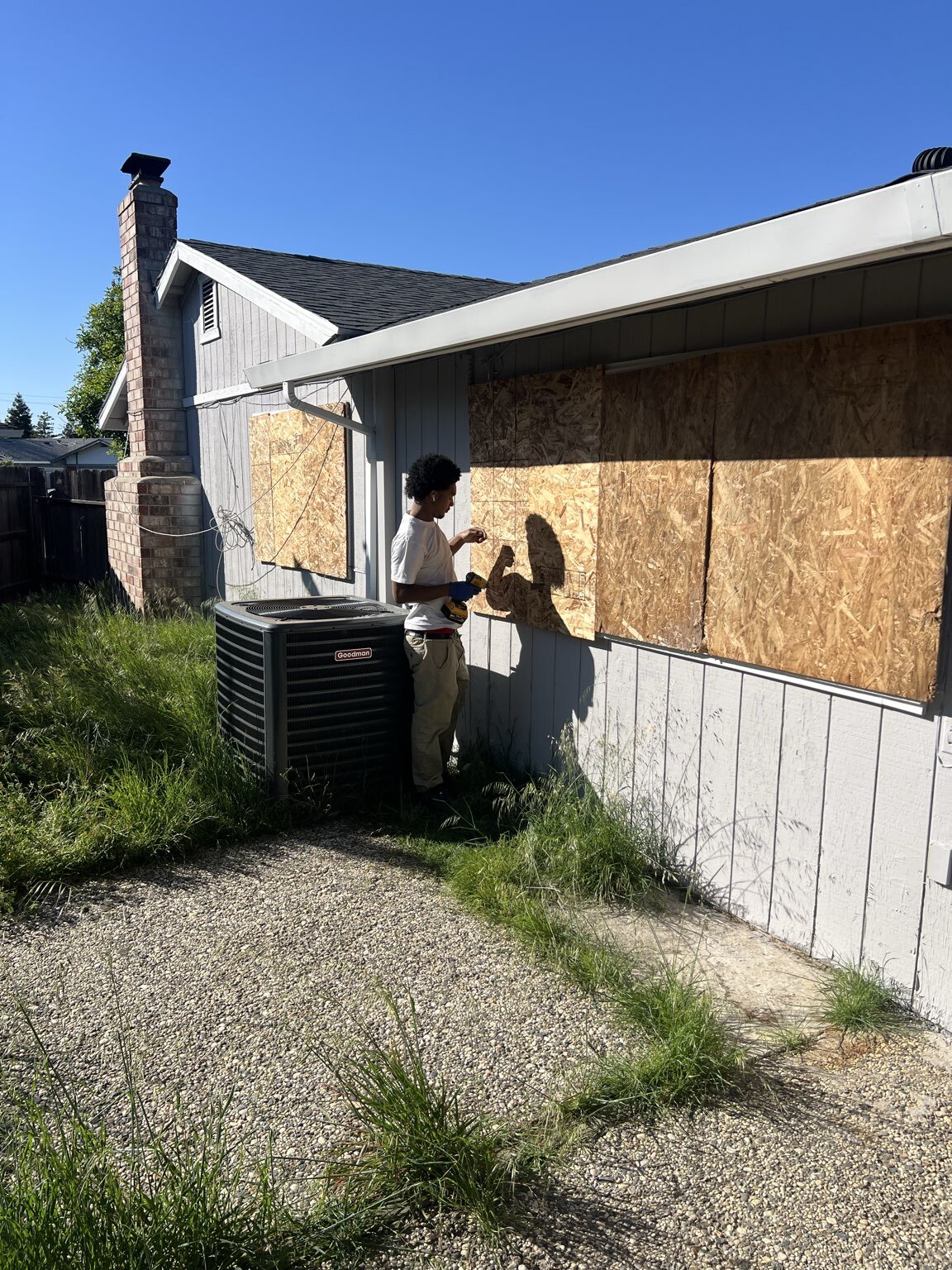
Darren’s experience is based on actual Northern California transactions involving tenants, deferred maintenance, inherited ownership, vacancy, difficult communication, and properties that were not ready for traditional listing photos or repeated buyer showings.
A traditional listing may make sense when the owner has time, repair money, easy access, and a property that can compete well with retail inventory. A local cash buyer may be worth comparing when the priority is certainty, speed, fewer contingencies, or a no-repairs as-is sale.
That comparison can be especially useful when an owner wants to sell a rental property as-is, sell a house with tenants, sell a tenant-occupied house, sell a rental property with tenants, sell a house with a non-paying tenant, sell a rental with a non-paying tenant, or simply sell a house fast without first renovating it for the market.
The practical question is not whether every seller should choose a direct cash buyer. It is whether the net, timeline, workload, and certainty of an as-is cash buyer or local as-is home buyer compare favorably with repairing and listing the Auburn property.
Not every tenant-occupied transaction becomes simple the moment escrow closes. In this real Sacramento-area case, a tenant broke back into the property after Darren had already purchased it.
This behind-the-scenes video shows why experience matters when selling a difficult property as-is. Unexpected access problems, belongings, deferred repairs, communication issues, tenant concerns, and post-closing complications require practical judgment—not polished promises.
The former owner had already completed the sale. Darren took responsibility for what happened afterward, illustrating one reason a direct cash buyer with real difficult-property experience can be valuable when an Auburn owner wants to transfer the property as-is and move forward.
Auburn sellers should not have to rely only on polished claims. These videos show actual tenant-occupied, repair-heavy, and difficult properties Darren has worked with throughout the greater Sacramento and Placer County region. That broader regional experience includes sellers and property situations relevant to Auburn, Sacramento, Lincoln, Roseville, and Rocklin.
See what can happen after a seller transfers a rental as-is. The owner did not have to complete this work before selling, coordinate contractors, or remodel the house to compete for a retail buyer.
This occupied property required substantial work. The seller was able to transfer the house without first removing everything, completing renovations, or making it retail-ready.
Walk through an actual property with Darren and see the kinds of conditions an as-is cash buyer may take on after closing. An Auburn seller does not have to make the property perfect before comparing a no-repairs as-is sale with a traditional listing.
“The most important proof is not a promise that every property situation will be easy. It is showing that the buyer has already worked through difficult occupants, deferred maintenance, belongings, repairs, and real people who needed a respectful solution.”Darren Brown — Licensed California Broker and Local Cash Buyer
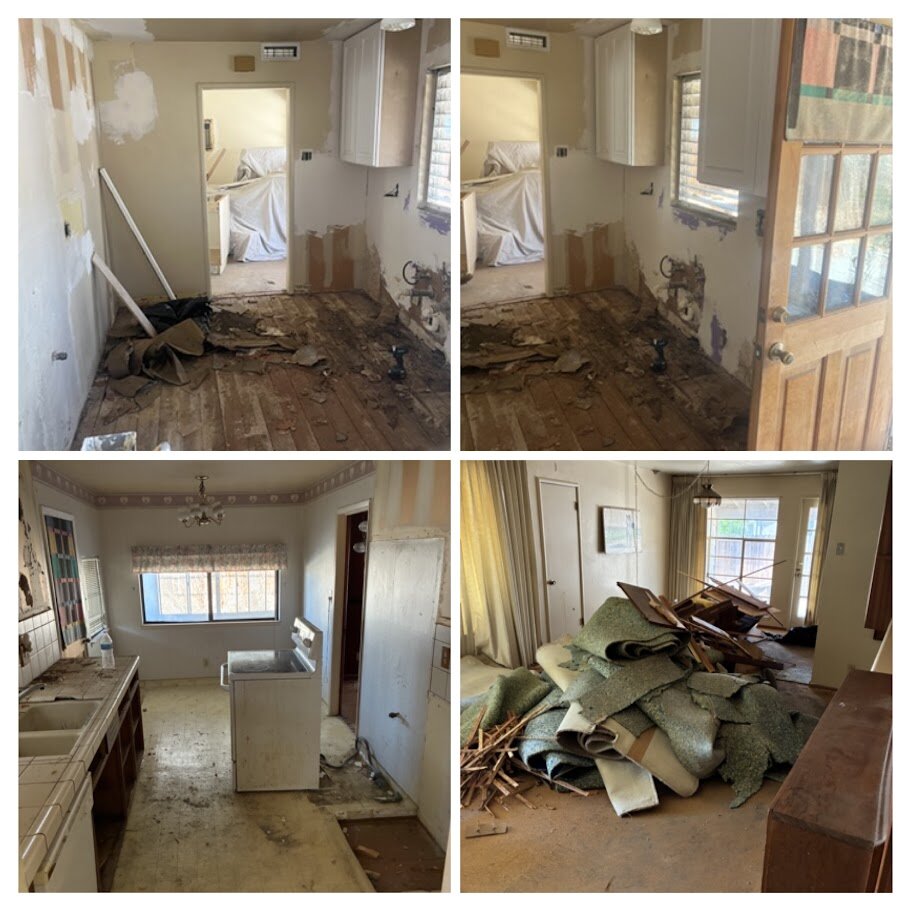
These images come from actual Northern California properties and provide evergreen regional proof for property owners in Auburn, Sacramento, Lincoln, Roseville, and Rocklin. They demonstrate why some Auburn owners compare a no-repairs as-is sale with financing repairs, managing contractors, supervising a cleanout, preparing for showings, and waiting for a conventional sale.
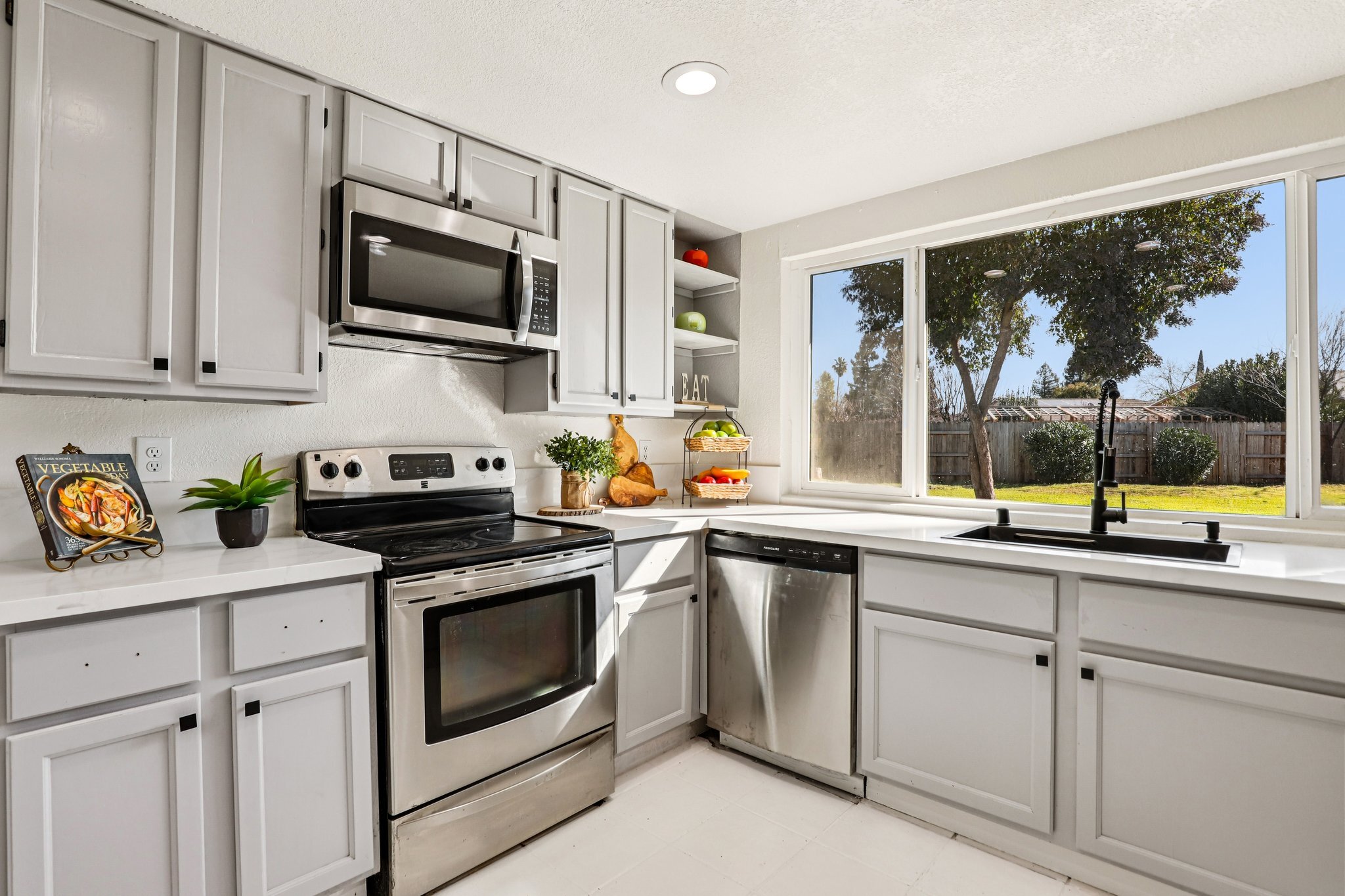
A real occupied-property transaction demonstrating the condition and improvement work a buyer may inherit after the seller closes.
Work that occurred after the purchase—not a list of projects the former owner had to complete before selling.

A property with repairs and deferred maintenance that became a candidate for a direct as-is purchase.
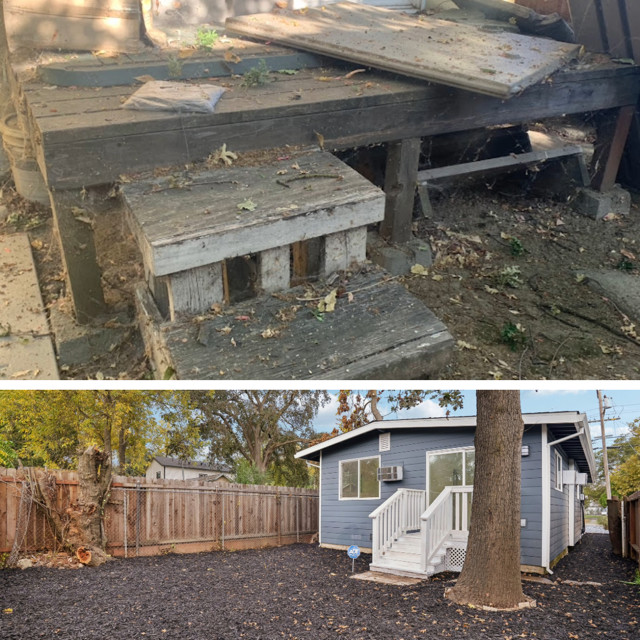
Deferred repairs can become another financial burden when a property no longer fits the owner’s plans or budget.
These sellers describe their own experiences working directly with Darren through real property transactions—useful proof for Auburn owners comparing a local cash buyer with a traditional listing.
A homeowner shares firsthand feedback about working with Darren during the sale of a property.
Additional seller proof showing the communication, process, and personal experience behind a direct transaction with Darren.
An Auburn homeowner may be handing over a valuable property, access details, tenant information, repair issues, and years of equity. Before signing an agreement, independently verify the cash buyer’s identity, licensing, professional background, business registration, community involvement, and transaction experience.
Darren Brown combines direct cash-buying experience with a professional California real estate brokerage background.
View Broker Documentation →Veteran-owned service centered on accountability, direct communication, follow-through, and doing what was agreed upon.
View Military Retirement Proof →Darren’s business has documentation supporting its Disabled Veteran Business Enterprise certification.
View DVBE Certification →Sellers can review the California Secretary of State filing associated with Darren’s operating business.
View State Business Filing →Review the independent Better Business Bureau profile for Darren Buys Homes Cash before accepting an offer.
View BBB Business Profile →Darren maintains a public connection to the Sacramento-region professional and business community while serving property owners across Auburn, Sacramento, Lincoln, Roseville, Rocklin, and surrounding Northern California communities.
View Chamber Listing →Review additional seller feedback, difficult property situations, and direct as-is sale experiences involving Darren Buys Homes Cash.
Review Seller Testimonials →Examine Darren’s professional background, business identity, and supporting trust documentation in one place.
Review Professional Credentials →Use the Seller Trust Center to evaluate the company, process, proof, and direct cash-buying experience before deciding who to work with.
Visit The Seller Trust Center →Another homeowner explains what it was like to work with Darren. Real seller feedback gives Auburn property owners a better basis for evaluating a direct cash buyer before making a decision.
The right decision depends on property condition, occupancy, repair costs, title issues, carrying costs, available reserves, timing, and how much additional work the owner is prepared to accept.
This may make sense when the Auburn owner has adequate reserves, still wants the property, and has a realistic plan for repairs, tenants, maintenance, and future carrying costs.
Some owners invest in repairs, cleanout, staging, and preparation so the property can compete for a traditional retail buyer.
A direct sale may be worth evaluating when the Auburn owner values certainty, wants to reduce seller workload, or does not want to complete repairs, cleaning, or remodeling before selling.
An Auburn owner can compare the likely net from a direct as-is cash offer with continuing to hold the property, completing repairs, preparing for showings, paying commissions and concessions, or attempting a traditional listing. The goal is to understand the difference between a cash buyer vs. listing—not to assume one option is automatically better.
An Auburn house can be dated, vacant, difficult to finance, full of deferred maintenance or facing inspection problems and still have viable sale options. These seven guides are designed to be used together—from the broad as-is decision through repairs, inspection and financing.
The foundation guide for Auburn homeowners comparing a direct as-is sale with repairing, preparing or traditionally marketing the house. Start here when several property problems overlap.
Explore Auburn As-Is Selling →Understand when you may be able to skip repairs, what condition still does to value and how a local as-is cash buyer evaluates a property that needs work.
Explore Selling Without Repairs →For houses where deferred maintenance has become a larger renovation project involving several systems, significant updates or buyer financing concerns.
Explore the Auburn Fixer Guide →Compare repairs and market preparation with the ongoing security, insurance, maintenance and carrying costs associated with an empty Auburn house.
Explore the Auburn Vacant House Guide →Compare contractor costs, renovation risk, carrying time and expected seller net before putting money into a house you already intend to sell.
Compare Repair vs. Sell As-Is →Learn what can happen when roof, electrical, plumbing, structural or other defects create inspection requests, financing questions or transaction risk.
Explore the Auburn Inspection Guide →Understand how condition, appraisal, insurance and lender requirements can shrink the financed buyer pool—and when changing the buyer may make more sense than changing the entire house.
Explore the Auburn Financing Guide →If your situation also involves tenants, inherited property, cleanup, speed or choosing a local buyer, continue with the most relevant Auburn resource below.
Return to the main site for information about selling houses as-is, local cash-buying options, tenant-occupied properties and difficult property situations throughout the Sacramento and Placer region.
Improving a house can absolutely create value. But when you already intend to sell, every repair becomes an investment decision: money goes out today in the hope that enough additional value comes back later. That investment deserves the same scrutiny as any other investment.
When an Auburn seller hears a contractor quote, it is easy to treat that number as the entire cost of choosing the repair-first path. In reality, the project can have several separate financial layers.
Labor, materials, demolition, cleanup and the actual work required to complete the planned repair.
Repairs frequently create finish work or expose related issues that were not obvious when the first estimate was prepared.
Taxes, insurance, utilities, maintenance and financing costs where applicable continue while the property remains yours.
Estimates, contractor access, scheduling, decisions, payments and project supervision require somebody’s attention.
The seller spends the money before knowing exactly what the eventual buyer will pay when the project is finished.
Capital placed into a property you plan to sell cannot be used somewhere else while the renovation is underway.
You do not need to predict every surprise. You do need to know whether a modest change in cost or time destroys the financial reason for doing the work.
| Repair Decision | Short-Term Benefit | Possible Longer-Term Tradeoff |
|---|---|---|
| Cosmetic Refresh | Better presentation and photography. | Buyer taste may differ, limiting how much of the cost comes back. |
| Replace Major System | Removes one known property concern. | Large amount of seller capital is committed before the sale. |
| Full Renovation | Potentially opens the house to a broader retail market. | Adds scope, time, management and greater exposure to budget changes. |
| Sell As-Is | Avoids completing the renovation before selling. | Offer typically reflects the buyer’s expected future repair burden. |
Now calculate the likely seller net from an as-is cash offer. A direct offer may be lower than the finished retail price because the buyer is accepting the property’s current condition and future renovation. The decision is whether the difference is large enough to justify doing the work yourself.
The decision is not limited to “renovate everything” or “take a cash offer.” An Auburn homeowner can compare three genuinely different strategies.
Invest in the house first and pursue a broader retail buyer pool.
Preserve open-market exposure while allowing buyers to see the current condition.
Compare an offer from a local cash buyer prepared to take over the renovation after closing.
American Avenue was a longtime rental with significant condition issues and major renovation needs. Before the eventual direct transaction, it had experienced approximately 250 days of prior market exposure.
The eventual direct sale closed in nine days.
The useful lesson is not that every owner should skip renovation. It is that market exposure does not remove the repair burden. When the property itself is the obstacle, the seller has to decide who should take responsibility for the project.
See the American Avenue Case Study →The highest sales price is not automatically the highest seller net.
Build room for additional scope rather than assuming the first estimate represents every future dollar.
Every repair week can also become another week of property ownership.
The next buyer may not assign the same value to your chosen finishes.
Once the money is spent, you cannot go back and compare the original as-is property.
Compare the likely repair-first net with the likely as-is net before committing capital.
| Repair Category | Typical Seller Question | Decision Consideration |
|---|---|---|
| Paint / Flooring | Will presentation improve enough to justify the spend? | Usually more predictable, but still buyer-preference driven. |
| Kitchen / Bathrooms | Refresh or full remodel? | Scope can expand quickly and finishes are partly subjective. |
| Roof / HVAC | Does replacing a major system improve financeability or value? | Large-ticket decision deserving a direct seller-net comparison. |
| Electrical / Plumbing | Is the visible problem the entire problem? | Greater possibility that diagnosis changes the initial scope. |
| Multiple Systems | Is this still a repair—or now a renovation? | Evaluate the house as one project rather than one estimate at a time. |
Darren Buys Homes Cash purchases houses directly throughout the Sacramento and Placer region, including properties with deferred maintenance, major repairs, tenant issues and other conditions where a seller wants to compare a no-repairs as-is sale before renovating.
These are the closest sitemap-verified repair and no-repair resources for the four regional cities connected to every Auburn authority page.
When repair work involves contractors, permits or prior property records, official sources can help you understand the project before committing money.
There is nothing inherently wrong with spending money before selling. Some Auburn homes should be improved before they go to market.
But the repair should have a purpose. It should meaningfully improve marketability, reduce a transaction obstacle or create enough additional seller net to justify the cost and time.
When the project is large, uncertain or likely to consume most of the expected upside, selling the property as-is deserves a serious comparison.
You do not have to decide today whether to renovate or sell directly. Get realistic numbers for both paths first. Then decide whether you want to invest in the house—or transfer the project to the next owner.
Repairing first can make sense when the work is predictable and the expected improvement in seller net clearly exceeds the project cost, carrying time and additional selling expenses. Compare that outcome with selling as-is before deciding.
Repairs that remove clear buyer objections or materially improve marketability deserve analysis. But every property is different. Evaluate the expected return rather than assuming cosmetic or major system work automatically pays for itself.
Not automatically. Roof condition can affect value, insurance, inspections and some financing situations, but replacement is a large expense. Compare the expected benefit with the cost and with an as-is sale before making the decision.
A kitchen remodel may improve retail appeal, but it can also become expensive and highly dependent on buyer taste. Compare a modest refresh, a full renovation and selling the existing kitchen as-is.
That is why the project should be stress-tested before you begin. Determine whether repairing first still produces a worthwhile seller-net advantage if the cost or timeline changes.
A buyer can agree to purchase a property in its existing condition. Condition still affects value and transaction terms, but the seller does not necessarily have to renovate the house before it can be sold.
An as-is offer may be lower than the potential sale price of a renovated property because the buyer is accounting for future work. The meaningful comparison is seller net after repair costs, carrying costs and the expenses associated with each sale path.
You can, but you do not necessarily need to begin work first. Getting both the repair information and an as-is offer can help you compare the alternatives before committing money.
When multiple systems overlap, evaluate the property as a complete project rather than making one repair decision at a time. Roof, HVAC, electrical, plumbing and cosmetic work together can create a very different financial picture.
Compare realistic seller net. Start with the expected finished sales price, subtract the repair budget, additional carrying time and selling expenses, and compare that result with the net from selling directly to a local cash buyer in the property’s current condition.
You can always decide to make repairs after you see the numbers. Before hiring contractors or funding a renovation, compare an as-is cash offer based on the property in its current condition. Then decide whether repairing first actually improves your seller net enough to justify the project.
Compare an As-Is Cash OfferNo obligation to accept an offer. Compare the repair path and the as-is path before deciding where to put your money.