

City Timeline
The dates associated with the notice, inspection, response or correction process.
A correction deadline changes the problem from “What should I eventually do with this property?” to “What can I realistically accomplish before this date?”
For an owner who does not want to complete a major repair project, the important questions are whether there is enough time to sell, what remains unresolved, what the buyer needs to know and whether the proposed buyer can actually perform within the available window.
If you are facing a Citrus Heights code-compliance deadline, take the deadline seriously and confirm what the City requires. From a sale standpoint, however, you can also investigate whether a qualified buyer is willing to purchase the property in its current condition before you commit substantial money to repairs. The proposed transaction needs to account for the known notice, unresolved conditions, available time and the buyer’s actual ability to close.
One difficult property I purchased in the greater Sacramento region involved approximately $28,000 in code violations along with serious occupancy complications and multiple unlawful-detainer issues.
That transaction is relevant here because difficult properties often have more than one problem happening at the same time. When code issues, occupancy problems, repairs and timing begin overlapping, the seller needs more than a theoretical buyer. The buyer needs to understand the property being purchased and be prepared to work through the actual condition.
When time matters, an attractive offer is useful only if the buyer has evaluated the known problems and has a realistic path to closing. Re-trading the price or discovering major issues late in escrow can consume time the seller may not have.
Review feedback from property owners who have worked with Darren Buys Homes Cash on real-world sales and difficult-property situations.
Without a deadline, an owner may be able to spend months gathering bids, coordinating contractors, completing repairs and preparing for a traditional sale.
With an active correction date, the analysis changes. The seller should compare not only potential sale prices, but also whether each strategy is realistically achievable within the available time.
Contractor availability, permit timing, inspections, repair overruns, buyer due diligence, financing and escrow can all consume time. A strategy that looks profitable on paper may not be practical if it cannot be completed within the seller’s real-world timeline.
Owners sometimes describe a code matter from memory: “I have 30 days,” “the City wants everything fixed,” or “I have to sell immediately.” Before making a financial decision, go back to the actual documents.
A seller should know the actual status before deciding whether there is enough time to repair, enough time to sell or whether additional professional guidance is needed.
The dates associated with the notice, inspection, response or correction process.
The time needed for bids, contractor scheduling, permits, materials, construction and inspections.
The time a buyer needs to inspect the property, complete due diligence and become committed to the transaction.
The time required for title, escrow, documentation, funding and the actual transfer of ownership.
The owner obtains bids, performs the work and continues through the applicable compliance process before selling.
This can make sense when the work is manageable, sufficient time is available and the improved property is expected to produce enough additional net value to justify the investment.
Depending on the specific circumstances, the owner may determine that certain issues need immediate attention while continuing to evaluate the larger property decision.
What is appropriate depends on the actual notice and should not be guessed from a general real-estate article.
The owner can determine whether a direct cash buyer is willing to evaluate the house with the known conditions and unresolved repair issues understood.
That gives the seller another path to compare before spending money on a repair project.
An as-is sale is a real-estate strategy. It generally means the seller is offering the property in its current condition rather than promising a renovation or repair program as part of the sale.
It should not be interpreted as permission to disregard an official notice, conceal a known condition or assume that a pending enforcement issue automatically disappears because a purchase agreement is signed.
Provide the available notice and known property information to the buyer. Let the buyer evaluate the house based on the condition that actually exists rather than creating a transaction that depends on the problem being discovered later.
A contractor may be able to estimate the cost of a repair without guaranteeing how quickly the entire compliance and sale process will be completed.
The right contractor may not be able to begin immediately, especially when several trades are required.
Some work may involve permits, inspections or additional steps beyond simply hiring someone to perform the physical repair.
Once work begins, additional conditions can be discovered that expand both the repair cost and the timeline.
Product availability and ordering can delay repairs that initially appeared straightforward.
Tenants, occupants or limited access can complicate estimates, inspections and contractor scheduling.
Completing the code work may still leave cleaning, deferred maintenance and other sale-preparation issues before a traditional listing is ready.
A seller facing a deadline should evaluate more than the number at the top of the purchase agreement.
The question is whether the buyer has actually evaluated the known condition and whether the agreement gives the seller a realistic path toward the intended closing.
| Buyer Factor | Why It Matters When Time Is Limited |
|---|---|
| Code Notice Reviewed | Reduces the risk that the buyer first discovers the known problem late in escrow. |
| Property Condition Reviewed | Helps determine whether the initial offer actually reflects the house being purchased. |
| Inspection Period | A long or open-ended investigation can consume valuable time before the seller knows whether the buyer will proceed. |
| Financing | Significant property-condition problems can create additional uncertainty when a purchase depends on conventional financing. |
| Earnest Money | Deposit terms are one indication of how the transaction is structured and when the buyer becomes financially committed. |
| Closing Ability | The seller should understand whether the buyer has a credible ability to complete the proposed purchase. |
| Repair Requirements | The seller should know whether the buyer expects any code corrections or repairs to be completed before closing. |
The better question is whether the buyer has already considered the property’s known problems when making the offer. A deadline-sensitive seller does not want to reach the middle of escrow only to discover that the buyer’s original price depended on a condition the property never had.
If a Citrus Heights owner has plenty of time, money and contractor resources, correcting the property first may produce the best result.
But once a real deadline enters the picture, I would evaluate the probability of completing each strategy, not just the theoretical upside.
A repair-first plan that assumes contractors start tomorrow, nothing else is discovered, every inspection goes smoothly and the finished property sells immediately may look excellent on paper. It is still a plan built on several future events going right.
An as-is sale has a different economic profile. The price may reflect the repairs and risk, but the seller may avoid funding and managing the rehabilitation before the property can be sold.
A written as-is offer gives the seller a real alternative to compare against the cost, time and uncertainty of completing the corrections. Then the owner can decide which path actually makes sense.
Property condition is only one part of a difficult sale. Occupancy, communication, access, repairs, utilities, timing, belongings, and the people affected by the transaction can all matter.
The Citrus Heights Butternut Drive transaction is one example. The property had been occupied by a non-paying tenant for approximately 18 months. When Darren purchased the house, it was without working electricity and air conditioning. After closing, utilities and essential conditions were addressed and a short-term rental arrangement was established with the occupant.
That is a tenant-related transaction, but the larger lesson applies beyond rental property: a difficult sale often requires understanding the entire situation rather than looking only at the physical house.
The value of this transaction is not simply that a tenant was involved. It demonstrates Darren’s willingness to evaluate properties with multiple overlapping complications rather than requiring the seller to solve every issue before a sale can be considered.
Every difficult property has a different story. Some houses need major repairs. Others involve tenants, deferred maintenance, unwanted belongings, title complications, code concerns, vacancy, inherited ownership, or simply an owner who does not want to spend additional time and money preparing the property for a traditional sale.
Darren Brown’s approach is to evaluate the property and the seller’s situation as they actually exist. That means an owner can compare a direct cash offer without first remodeling, cleaning out, making the house retail-ready, or pretending difficult issues are not there.
The transaction proof below is included for one reason: to show the type of real-world property situations Darren has personally worked through. It is not a promise that every transaction will be identical. It is documented experience that sellers can evaluate before deciding who they want to work with.
Traditional retail selling often works best when a property can be prepared, photographed, shown repeatedly, inspected, appraised, and financed without significant complications. Many Citrus Heights houses fit that model.
Others do not.
An owner may be dealing with repairs, an occupied house, accumulated belongings, an inherited property, deferred maintenance, title questions, code concerns, vacancy, vandalism, an aging rental, or another circumstance that makes conventional preparation less attractive.
A direct as-is sale provides another number and another strategy to compare. It does not automatically mean a cash offer is the best option. It means the seller can evaluate the property without first paying to transform it into a different property.
Evaluate the house as it sits, including deferred maintenance, damage, cleanup, major repairs, or outdated systems.
Consider tenants, relatives, occupants, belongings, vacancy, limited access, or other practical issues affecting the sale.
Compare net proceeds, required investment, timeline, certainty, convenience, and transaction risk—not simply the advertised sale price.
Difficult-property transactions are not always complicated because of repairs alone. In this real Sacramento-area transaction, a former tenant broke back into the property after Darren had already purchased it.
The former seller had already completed the transaction. Darren was then responsible for dealing with the unexpected access and security issue after ownership transferred.
This case is useful beyond tenant-related pages because it demonstrates what it means for a direct buyer to assume the practical risks that may remain after a difficult property closes.
Sellers evaluating an as-is buyer should consider more than the offer amount. They should also consider whether the buyer understands occupancy, belongings, access, deferred repairs, security, cleanup, title coordination, and unexpected problems.
Sellers should not have to rely only on polished marketing claims. These videos show actual Sacramento-area properties Darren purchased and worked on after closing.
See what happened after this property transferred as-is. The former owner did not have to complete this work before selling, coordinate the renovation, or prepare the house to compete for a retail buyer.
This tenant-occupied hoarder property required substantial work. The seller transferred the property without first removing everything, completing renovations, or making the house retail-ready.
Walk through an actual property with Darren and see the types of physical conditions a direct as-is cash buyer may take on after closing. A seller does not have to make a difficult house perfect before discussing a sale.
“The most important proof is not a promise that every difficult property will be easy. It is showing that the buyer has already worked through real occupancy problems, deferred maintenance, belongings, repairs, property-condition issues, and unexpected situations.”Darren Brown — Licensed California Broker and Local Cash Buyer
These images come from actual Sacramento-area transactions. They demonstrate why property owners may compare an as-is sale with spending additional money on repairs, cleanout, contractor management, and retail preparation.

A real transaction showing improvement work that became the buyer’s responsibility after the seller completed the sale.
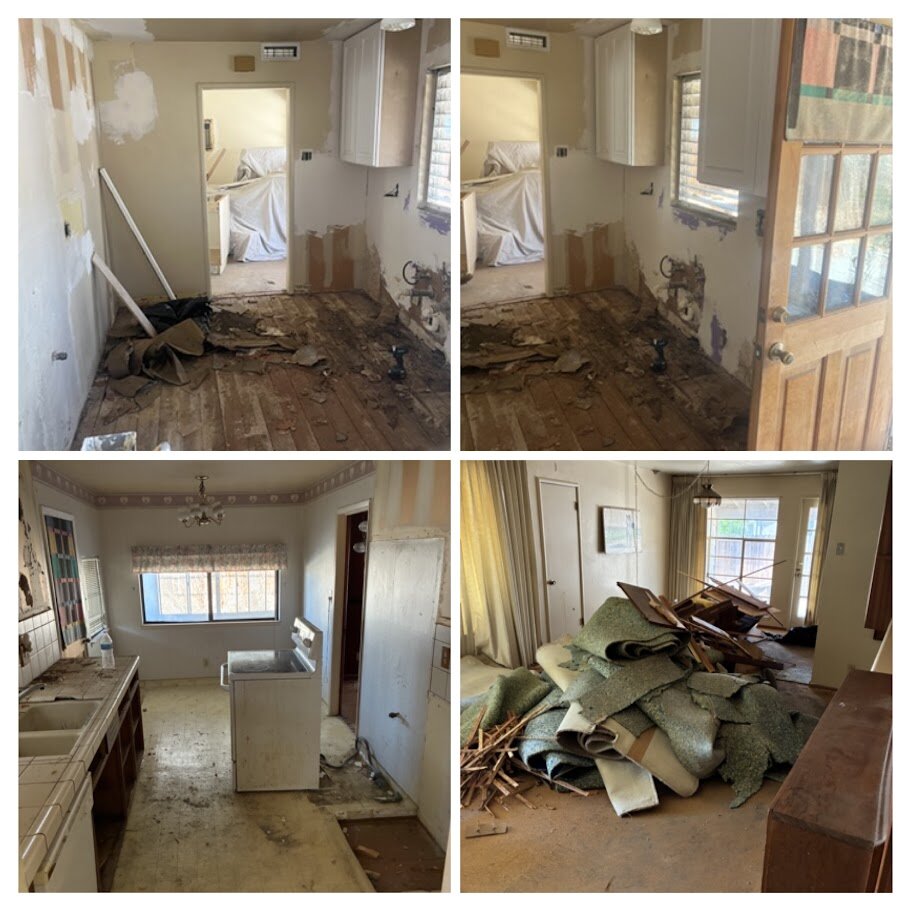
Work completed after the purchase—not a list of projects the former owner had to finish before selling.

A real Sacramento-area property with repairs and deferred maintenance that became a candidate for a direct as-is purchase.
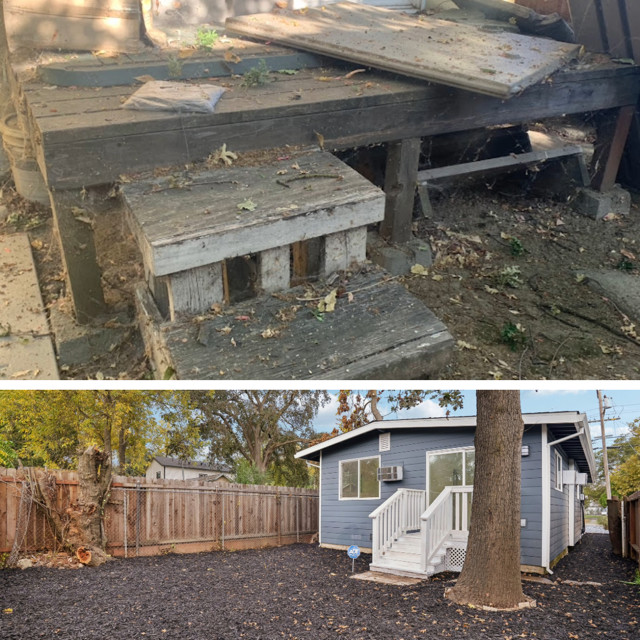
Safety problems and deferred maintenance can create another layer of expense when an owner is deciding whether to repair or sell the property in its present condition.
These homeowners describe their own experiences working directly with Darren through real property transactions.
A homeowner shares firsthand feedback about working with Darren during a real property sale.
Additional seller proof showing the communication, transaction process, and personal experience behind a direct sale with Darren.
Whether a property has repairs, tenants, liens, deferred maintenance, code issues, title complications, unwanted belongings, vacancy, inherited ownership, or another difficult condition, the buyer should still be independently evaluated.
Before signing an agreement, sellers can verify Darren’s licensing, professional background, business registration, veteran status, community involvement, seller experiences, and transaction history.
Darren Brown combines direct cash home buying experience with a professional California real estate brokerage background.
View Broker Documentation →Veteran-owned service centered on accountability, direct communication, follow-through, and doing what was agreed upon.
View Military Retirement Proof →Darren’s business has documentation supporting its Disabled Veteran Business Enterprise certification.
View DVBE Certification →Sellers can review the California Secretary of State filing associated with Darren’s operating business.
View State Business Filing →Review the independent Better Business Bureau profile for Darren Buys Homes Cash before accepting an offer.
View BBB Business Profile →Darren maintains a public connection to the Sacramento region’s professional and business community.
View Chamber Listing →Review additional seller feedback, property situations, and experiences involving Darren Buys Homes Cash.
Review Seller Testimonials →Examine Darren’s professional background, business identity, and supporting trust documentation in one place.
Review Professional Credentials →Use the Seller Trust Center to evaluate the company, process, transaction proof, and cash home buying experience before deciding.
Visit The Seller Trust Center →Another homeowner explains what it was like to work directly with Darren. Real seller feedback gives a property owner a better basis for evaluating the person behind the offer before making a decision.
The strongest option depends on property condition, available equity, repair costs, occupancy, title issues, timing, available cash, likely net proceeds, and how much additional work the owner wants to take on before selling.
Continued ownership may make sense when the property still fits the owner’s goals and there is enough time, money, and willingness to address the problems before reconsidering a sale.
A conventional listing may be appropriate when the owner has the resources and time to prepare the property and wants broad exposure to retail buyers.
A direct as-is sale may be worth evaluating when the owner wants a defined alternative without first making the property vacant, repaired, remodeled, cleaned out, or retail-ready.
Darren can evaluate a Citrus Heights property in its current condition and provide a direct as-is option that can be compared with keeping the house, completing repairs, resolving other property issues, or preparing for a traditional listing.
Use these local resources to compare selling options by property condition, tenant situation, ownership challenge, timing, and the type of sale you are considering.
Start with the main Citrus Heights service-area page for local selling options and property situations.
Read Citrus Heights Guide → Landlord & Tenant ProblemsA focused Citrus Heights guide for landlords dealing with missed rent while considering an as-is sale.
Read Citrus Heights Guide → Local Case StudySee a real Citrus Heights rental-property case study involving non-paying tenants and a seven-day closing.
Read Citrus Heights Guide → Tenant-Occupied PropertyReview options for selling a Citrus Heights house while a tenant is still occupying the property.
Read Citrus Heights Guide → Tenant Exit QuestionsUnderstand the selling questions that arise when a Citrus Heights tenant will not leave before a planned sale.
Read Citrus Heights Guide → Landlord Exit StrategyA Citrus Heights resource for owners comparing continued management with selling a rental property as-is.
Read Citrus Heights Guide → Remote OwnershipFor landlords who own a Citrus Heights rental from outside the area and want to compare an as-is exit.
Read Citrus Heights Guide → Rental Property SaleA broader Citrus Heights landlord resource covering a direct cash-buyer option for rental property.
Read Citrus Heights Guide → Unauthorized OccupancyExplore a Citrus Heights-specific resource for selling a house with squatters or unauthorized occupants.
Read Citrus Heights Guide → Hoarder & Heavy CleanoutFor Citrus Heights properties with extensive belongings, debris, or cleanout needs that may be sold as-is.
Read Citrus Heights Guide → Code & Property ConditionA Citrus Heights guide for owners facing code issues while evaluating an as-is sale.
Read Citrus Heights Guide → Tax ProblemsReview options when delinquent property taxes are part of a Citrus Heights home sale.
Read Citrus Heights Guide → ForeclosureA Citrus Heights resource for owners considering a sale before a foreclosure timeline advances further.
Read Citrus Heights Guide → As-Is / No RepairsCompare selling a Citrus Heights property in its present condition without completing repairs first.
Read Citrus Heights Guide → Repair DecisionA decision-focused Citrus Heights resource for weighing repair costs against selling in current condition.
Read Citrus Heights Guide → Fixer-UpperFor Citrus Heights homes with deferred maintenance, dated systems, or larger repair needs.
Read Citrus Heights Guide → As-Is Seller GuideA Citrus Heights-specific explanation of what an as-is sale can mean for repairs, preparation, and buyer expectations.
Read Citrus Heights Guide → Vacant PropertyReview a direct as-is option for an empty Citrus Heights property that may be costing money to hold.
Read Citrus Heights Guide → Inherited PropertyA Citrus Heights resource for owners evaluating the sale of an inherited house.
Read Citrus Heights Guide → Cash Sale ProcessLearn the basic Citrus Heights cash-sale process and what sellers can compare before accepting an offer.
Read Citrus Heights Guide → Closing TimelineA Citrus Heights-specific resource focused on timing, process, and what can affect a faster cash closing.
Read Citrus Heights Guide → Buyer VerificationUse this local guide when comparing cash buyers and checking experience, credibility, and the proposed transaction.
Read Citrus Heights Guide → Local As-Is Cash BuyerA Citrus Heights overview for owners comparing a direct as-is cash-buyer sale with other selling routes.
Read Citrus Heights Guide → Cash Buyer OverviewAdditional Citrus Heights information for sellers researching local cash-buyer options.
Read Citrus Heights Guide →From a real-estate perspective, the critical issue is whether a buyer, seller, title company and escrow can complete the transaction within the available window while the known property conditions and code matter are understood.
The existence of a deadline does not automatically guarantee that a sale will resolve or change the City’s requirements. That is why the owner should confirm the enforcement status directly with the City while also evaluating whether a sale can realistically close in time.
How quickly can the buyer evaluate the notice, property condition and access?
Are there title issues, liens or other matters that could slow the sale?
How quickly can documents, payoff information and seller requirements be completed?
Does the buyer have a realistic ability to fund and close within the proposed timeline?
The buyer’s inspection rights, contract contingencies, proof of funds, title issues and actual closing process matter more than a verbal promise to close quickly.
A short deadline does not make guessing safer. It makes clarity more important.
If the date is very close, the owner should identify what can actually be accomplished within the remaining time and avoid building the plan around optimistic assumptions.
Verify the current status and any applicable instructions with the City rather than relying on memory or an old letter.
Determine whether a buyer can review the property, remove unnecessary uncertainty and move immediately into title and escrow.
A buyer should know that the property is under a time-sensitive code matter before the offer is written.
The worst buyer for a deadline-sensitive property is one who writes an offer without understanding the problem and then spends valuable escrow time deciding whether the property still fits.
If time is limited, organizing the information you already have can reduce unnecessary back-and-forth.
The goal is to give the buyer and escrow enough accurate information to evaluate the transaction quickly without forcing everyone to reconstruct the situation after escrow has already opened.
| Decision Factor | Repair / Correct First | Sell As-Is Before Deadline |
|---|---|---|
| Repair Expense | Seller funds contractors, materials, permits and correction work. | Buyer factors expected repair costs into the purchase decision. |
| Available Time | Must allow enough time for contractor work and related inspections. | Depends on buyer due diligence, title, escrow and funding speed. |
| Carrying Costs | Continue while repairs and sale preparation are underway. | Potentially reduced if a direct buyer can close sooner. |
| Repair Overruns | Seller bears the risk that additional work is discovered. | Buyer prices future repair uncertainty into the as-is transaction. |
| Future Sale Price | May be higher if the property is successfully corrected and improved. | Reflects the property’s current condition and known risk. |
| Deadline Risk | Depends on whether the repairs can actually be completed in time. | Depends on whether the buyer can actually close in time. |
| Best Comparison | Future net proceeds after repairs, carrying costs and sale expenses. | Current net proceeds under the actual as-is offer and closing terms. |
A theoretical repaired value does not help if the property cannot realistically reach that condition in time. Compare the expected net result and probability of completion for each strategy.
Darren can evaluate whether the property makes sense as an as-is purchase. The City determines the status of its own code matter. When the deadline is important to the transaction, use the City’s current information and applicable department contacts.
A seller under time pressure should not assume that every cash buyer has the same closing ability, contract structure or understanding of code issues.
If the first buyer consumes the available time and then cancels or demands a large price reduction, the seller may lose options that were available at the beginning.
Potentially. The practical question is whether the buyer can evaluate the known conditions and complete the transaction within the available timeline while the City’s requirements are separately confirmed.
No. A direct buyer can evaluate the property in its current condition and determine whether an as-is purchase is something the buyer would consider.
Do not assume that it does. The status of the City’s enforcement matter should be confirmed directly with the applicable department.
Confirm the current City status immediately and evaluate only sale strategies with a realistic ability to perform within the remaining time.
Yes, the available notice is important property information and helps the buyer evaluate the transaction before writing or relying on the offer.
Tell the buyer what has been completed, what remains unfinished and provide available invoices, estimates or inspection information.
A buyer can evaluate known conditions and uncertainty together. The seller does not need to invent a precise future repair bill.
The underlying property condition may create appraisal, inspection or lender concerns. A direct cash purchase avoids conventional purchase financing but still requires the buyer to understand the property risk.
Possibly. Compare the expected increase in future net proceeds with the repair cost, available time, carrying expenses and risk of missing the deadline.
Review the buyer’s inspection period, contingencies, earnest money, proof of funds or closing ability, repair requirements and written closing timeline.
Darren can review the notice, property condition, known repair issues and available timeline to determine whether the property fits his criteria for a direct as-is purchase.
Confirm the actual deadline, organize the code and property records, estimate the repair path and compare it with a real as-is offer from a buyer who understands the deadline before escrow begins.
Start by confirming the notice and the actual dates that matter.
Then determine whether completing the corrections is realistically achievable within the available time and whether the likely increase in future net proceeds justifies the repair expense and carrying costs.
At the same time, determine what a local direct cash buyer would consider paying for the Citrus Heights property as-is with the known code matter and deadline disclosed and understood.
The better decision is the path with the strongest combination of net proceeds, realistic timing and closing certainty.
You do not have to commit to a major repair project simply to learn whether a direct sale is possible.
Share the property address, code notice, deadline, known repairs and available access. Darren can evaluate the house as a local direct cash buyer and give you an as-is option to compare against completing the corrections first.
General real-estate information only. This page is not legal advice, building-code advice or a representation that a sale will suspend, satisfy, terminate or transfer a particular Citrus Heights enforcement matter. Property owners should confirm case-specific deadlines, requirements and enforcement status directly with the City of Citrus Heights or appropriate qualified professionals.